









for scientists:
for curious readers:
Welcome to the Pages of SFB 677!
Our research is focused on molecular switches and machines in the field of molecular nanosciences. About 100 scientists from chemistry, physics, materials sciences, and pharmacy collaborate in an interdisciplinary way. On these pages we provide scientists, corporations, media, teachers and students with information on our research as well as our progress.
show info about SFB 677 show contact information show imprint
About SFB 677 "Function by Switching"
Facts
- number of active projects: 18
- number of principal investigators: 21
- number of scientists: about 100 (students, postdocs, P.I.s)
- 1. funding period: 07/2007 - 06/2011
- 2. funding period: 07/2011 - 06/2015
- budget: 10.3 mio. EUR (3. funding period)
Research Program
Virtually all technical engineering functions that are realized in our macroscopic world have been implemented on a molecular scale by nature. Molecuar pumps transport substances through cell membranes, motors fueled by ATP drive molecular vehicles along polymer tracks. Repair enzymes constantly control our genetic information, automatically uncovering and mending defects.
A switching process triggered by external signals is the common basis for all aforementioned molecular or macroscopic functions and applications. Switching is not only the basic principle of digital data processing, it also serves as a fundamental step in the operation of motors, actuators, sensors and machinery of any kind.
The Collaborative Research Center (SFB) "Function by Switching" aims at the implementation of essential and elementary functions using artificial (abiotic) systems on a molecular basis. In the same way as in information processing, the inherent miniaturization of technical processes to a molecular scale will result in a considerable increase in efficiency and performance as well as the development of new applications.
To achieve a function by a switching process, molecular switches have to be incorporated in a well-defined environment. The nature of this environment and its interaction with the switch subdivides this project into three project areas.
SFB 677 Contact Information
Collaborative Research Center (SFB) 677 - Function by Switching
Chairman: Prof. Dr. Rainer Herges (Org. Chemistry)
Deputy Chairman: Prof. Dr. Olaf Magnussen (Physics)
Deputy Chairman: Prof. Dr. Richard Berndt (Physics)
Deputy Chairman: Prof. Dr. Felix Tuczek (Inorg. Chemistry)
Secretary: Wiebke Wagner
Otto-Diels-Institut für Organische Chemie
Otto-Hahn-Platz 3
24118 Kiel
phone: +49 (0)431 880-4617
fax: +49 (0)431 880-2646
e-mail: wwagner@oc.uni-kiel.de
show participating institutions
Imprint
This web site was created on behalf of:
Collaborative Research Center (SFB) 677 - Function by Switching
at the Christiana Albertina University of Kiel
Chairman: Prof. Dr. Rainer Herges
Otto Diels Institute for Organic Chemistry
Otto-Hahn-Platz 4
24118 Kiel
e-mail: rherges@.uni-kiel.de
phone: +49 (0)431 880-2440
fax: +49 (0)431 880-1558
Web-Design:
Dr. Torsten Winkler
Otto Diels Institute for Organic Chemistry
Otto-Hahn-Platz 4
24118 Kiel
e-mail: twinkler@oc.uni-kiel.de
phone: +49 (0)431 880-1928
fax: +49 (0)431 880-1558
V.i.S.d.P.:
Christian-Albrechts-Universität zu Kiel
Präsidium
Olshausenstr. 40
24118 Kiel
Disclaimer:
No liability is taken for the content of external websites.
News from SFB 677
Abb. © Alexander Schlimm
Abb. © Alexander Schlimm
July 2020
Faculty award for a dissertation from the CRC 677
For his outstanding dissertation on functional molecules on gold surfaces, the inorganic chemist Dr. Alexander Schlimm received one of the two Faculty Awards 2019 of the Faculty of Mathematics and Natural Sciences. He completed his Ph.D. supervised by Professor Felix Tuczek within the CRC 677. "My work focused on transition metal complexes for the activation of small molecules, as well as photoswitchable molecules, which can also serve as components of ultra-small molecular machines.
show more
Using extremely sensitive analytical methods, I was able to investigate adsorbate-substrate interactions in particular," summarises Schlimm. With his results, Schlimm has contributed considerably to a better understanding of such systems. He is thus providing new insights into the field of heterogeneous catalysis and the realisation of molecular electronics.
"I really enjoyed the numerous opportunities and varied cooperations - from measurements at the electron storage ring in Paris to a conference visit in Shanghai. I am very grateful to the university, the SFB, my cooperation partners and above all my doctoral supervisor Mr. Tuczek, it was a great collaboration with him," says Schlimm about his time at the CAU.
From 2010 to 2015 Schlimm studied chemistry at Kiel University, obtaining a bachelor’s and a master’s degree. Here he completed his dissertation in 2019 with the title "Transition Metal Complexes for Surface Deposition and Photoswitchable Self-Assembled Monolayers on Au (111): Surface Spectroscopic Characterization". During the third funding phase of the CRC, Schlimm coordinated the Integrated Research Training Group from 2015 to 2019. As part of the qualification of young researchers, he organized conferences, workshops and alumni lectures to expand key qualifications and strengthen networking in the CRC. Schlimm is now laboratory manager at the pharmaceutical company Lichtenheldt GmbH in Schleswig-Holstein.
Usually at CAU, the best dissertations of a year are presented at a joint grand award ceremony held by all faculties. "However, on the occasion of the Corona pandemic, we have decided, with a heavy heart, to forego the usual presentation of the prizes at a ceremony," Professor Anja Pistor-Hatam, Vice President for Academic Affairs, International Affairs and Diversity, regarding this year's award ceremony. Therefore, all prize winners received their certificates by post. The faculty prizes are endowed with 1,000 euros each.
Press release of the CAU (in German) 21.07.2020
Text: Julia Siekmann
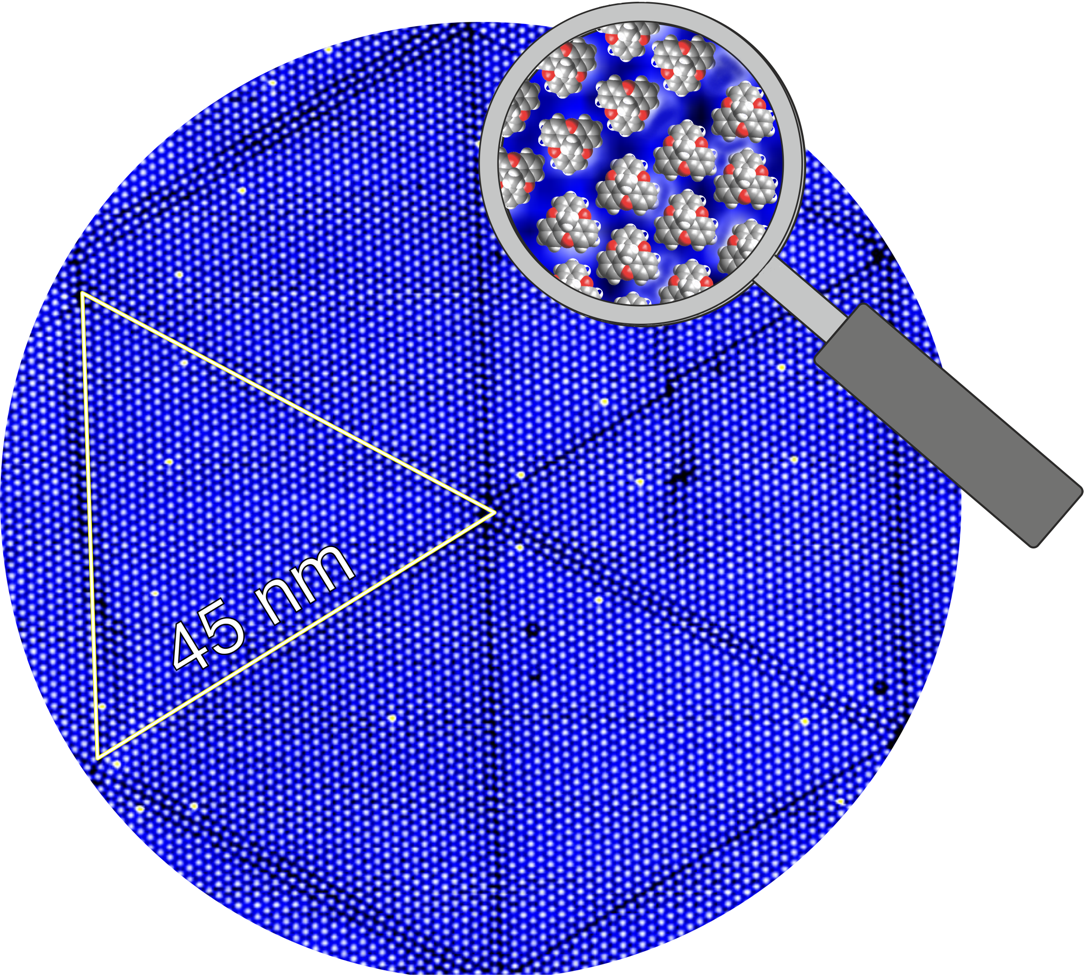
Scanning tunneling microscopy (STM) image of a self-assembly of triangular molecules on a silver surface. The repeated pattern (half of a pattern is indicated in yellow) has a size of 45 nanometers. Each dot corresponds to a molecule with a diameter of ~ 1nm.
Abb. © Manuel Gruber, Torben Jasper-Tönnies
Abb. © Manuel Gruber,
Torben Jasper-Tönnies
March 2020
How molecules self-assemble into superstructures
Most technical functional units are built bit by bit according to a well-designed construction plan. The components are sequentially put in place by humans or machines. Life, however, is based on a different principle. It starts bottom-up with molecular self-assembly. The crystallization of sugar or salt are simple examples of self-assembly processes, where almost perfect crystals form from molecules that randomly move in a solution. To better understand the growth of macroscopic structures from molecules, a research team of physicists and chemists of Kiel University has mimicked such processes with custom-made molecules. As recently reported in the journal Angewandte Chemie they fabricated a variety of patterns over a wide range of sizes including the largest structures reported so far.
show more
The researchers deposited triangular molecules (methyltrioxatriangulenium) on gold and silver surfaces and observed their self-assembly into honeycomb superstructures using a scanning tunneling microscope. The structures are comprised of periodic patterns with controllable sizes. “Our largest fabricated patterns contain subunits of 3.000 molecules each, which is approximately 10 times more than previously reported”, says Dr. Manuel Gruber, a physicist from Kiel University. The team also developed a model of the intermolecular forces that drive the self-assembly. “The unique feature of our results is that we can explain, predict and even control their size”, Gruber continues.
The detailed understanding of the driving forces controlling the size of the patterns holds promises for nanotechnology applications, and in particular for functionalization of surfaces. It may be envisioned to tune various physical properties like electronic, optical or reactivity to gases of a material by controlling the size of the superstructures on its surface.
Original publication:
T. Jasper-Tönnies, M. Gruber, S. Ulrich, R. Herges and R. Berndt, Coverage‐Controlled Superstructures of C3 Symmetric Molecules: Honeycomb versus Hexagonal Tiling, Angew. Chem. Int. Ed., DOI: 10.1002/anie.202001383
Text: Julia Siekmann

Upper panel: Sketch of the measurement scheme. Using an atomically sharp and magnetic tip (triangle with green arrow), the exchange force and tunnel current between the ferromagnetic tip and the cycloidal magnetic spiral in a single-atom manganese film is detected. The blue and green arrows indicate the direction of the magnetic moments of the atoms (atomic “bar magnets”) at the surface. Lower panel: Combined force- and current-based detection of the magnetic spiral structure. In the force map (blue-yellow color code) the surface atoms appear at different contrast levels due to the magnetic structure. The scale bar in the lower right corner shows the length scale (0.5 nm = 0.5 nanometers).
image © Nadine Hauptmann
image © Nadine Hauptmann
March 2020
Quantifying exchange interactions on the atomic scale
Today, there is a great effort to scale down magnetic memory towards nanometer-sized bits in order to ultimately store information in a single magnetic atom. This makes it necessary to image magnetic properties on the atomic scale. At the heart of magnetism is the exchange interaction – proposed by Werner Heisenberg in 1926 based on quantum mechanics – which aligns the “bar magnets” of single atoms. Utilizing a novel type of microscope allowing to measure forces and currents on magnetic surfaces and first-principles quantum mechanical calculations, scientists from Nijmegen and Kiel have now reported on ultra-high magnetic resolution of a magnetic spiral structure and quantification of exchange interactions at the atomic scale. Their joint work is published in the renowned journal Nature Communications..
show more
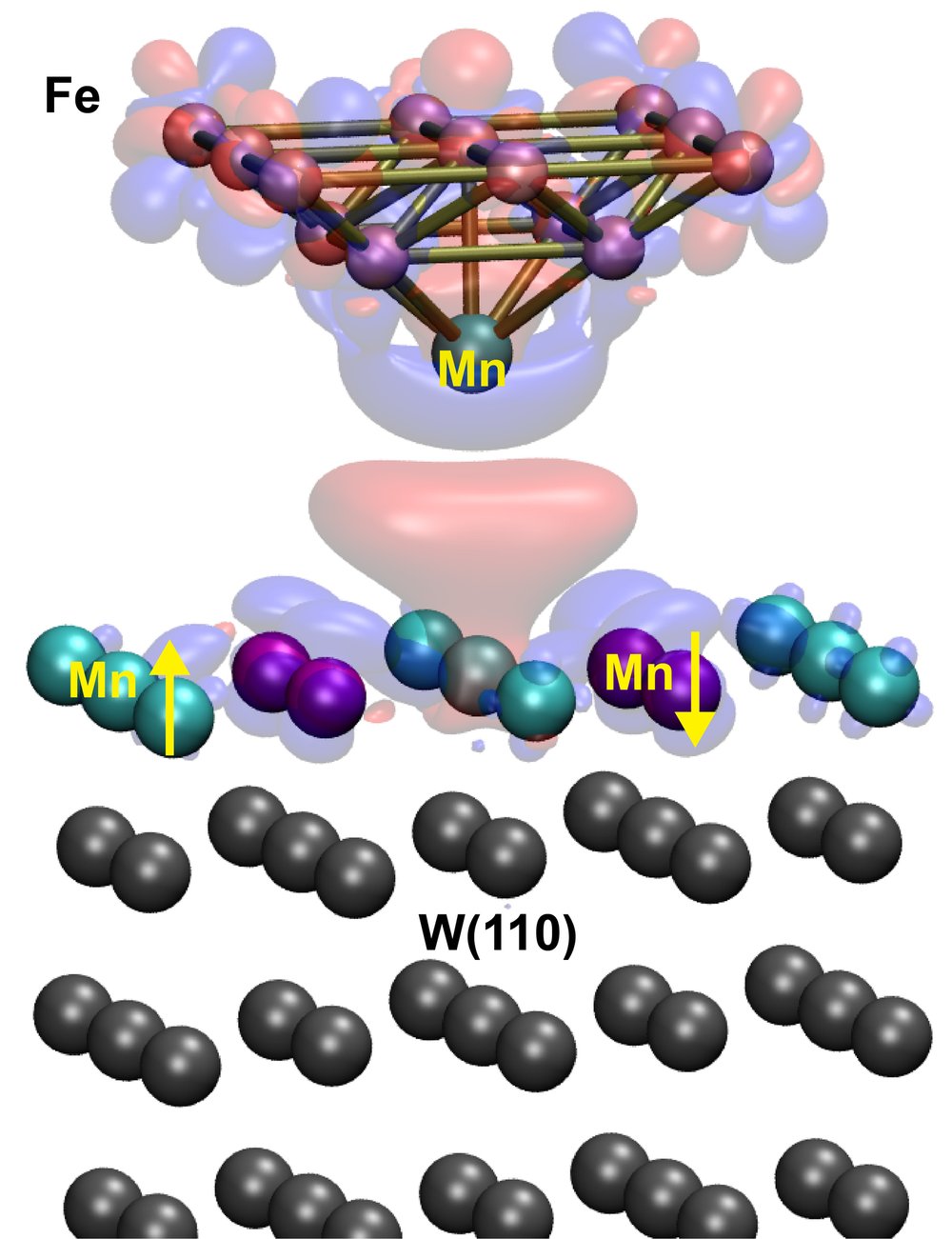
Simulation of the exchange interaction between the pyramidal magnetic tip, which consists of iron (Fe) atoms and terminates with a manganese (Mn) apex atom, and the surface. The surface consists of an atomic layer of manganese (Mn) atoms with “atomic bar magnets” pointing upwards (↑) or downwards (↓). The manganese layer rests on the surface of a tungsten crystal (W(110)). Red and blue isosurfaces show the interaction between electron densities of tip and surface atoms.
Abb. © Soumyajyoti Haldar
Abb. © Soumyajyoti Haldar
In the 1980’s Gerd Binnig and Heinrich Rohrer developed at the IBM research center in Rüschlikon in Zurich the scanning tunneling microscope for which they were later awarded the Nobel prize. In this instrument a sharp metallic tip is brought to a distance of about half a nanometer above a surface. At this tiny separation a small tunnel current flows between tip and surface. By scanning the tip across the surface this allows to resolve the atomic structure of surfaces. If a magnetic metallic tip is used even magnetic properties become accessible. However, the current is sensitive to numerous other signals which strongly convolute the magnetic information.
On the other hand, there is also a force acting between the atoms of the tip and those of the surface. If both tip and surface are magnetic, this force includes the Heisenberg exchange interaction. Recently, researchers around Professor Alexander Khajetoorians and Dr. Nadine Hauptmann from the Dutch Radboud University in Nijmegen developed a novel microscope which allows to measure the magnetic contributions to the current and force simultaneously.
In their present work, the researchers from the Radboud University and Kiel University, Germany, present unprecedent high-resolution imaging and quantify the exchange force field between a ferromagnetic tip and a chiral magnetic spiral structure. “With our new technique we could show that the force measurements are more sensitive to atomic-scale variations of the exchange force field and the local chemical environment than the current,” says Dr. Nadine Hauptmann.
First-principles quantum mechanical calculations performed on the super computers of the Northern German Supercomputing Alliance (HLRN) explain the experimental observations. “Our calculations show that the last atom at the tip plays a crucial role for the obtained exchange forces and reveal a competition of different exchange mechanisms,” as Dr. Soumyajyoti Haldar from Kiel University points out.
Their work creates a new state of the art in high-resolution imaging of complex magnetic structures, and demonstrates that exchange interactions can be quantified on the atomic scale. In the future the approach will allow to study single magnetic atoms or magnetic molecules.
The Kiel part of the work was done within the Collaborative Research Center CRC 677 "Function by Switching" of Kiel University.
Original article
N. Hauptmann, S. Haldar, T.-C. Hung, W. Jolie, M. Gutzeit, D. Wegner, S. Heinze, and A. A. Khajetoorians, Quantifying exchange forces of a spin spiral on the atomic scale, Nature Communications, 05.03.2020 (2020). DOI: 10.1038/s41467-020-15024-2
Text: Julia Siekmann
image
© R. Berndt
December 2017
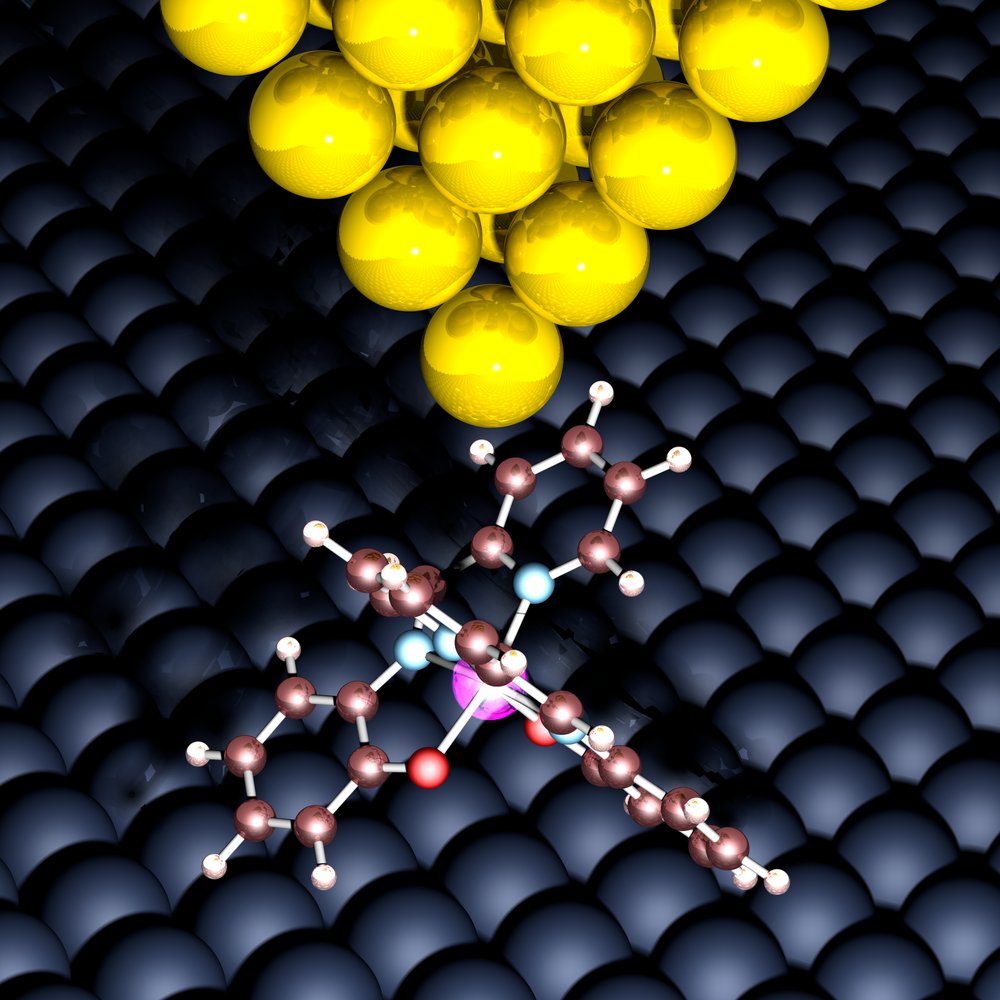
Towards data storage at the single molecule level: Research team at Kiel University saves information on a single molecule
Over the past few years, the building blocks of storage media have gotten ever smaller. But further miniaturization of the current technology is hindered by fundamental limits of quantum mechanics. A new approach consists in using so-called spin-crossover molecules as the smallest possible storage unit. Similar to normal hard drives, these special molecules can save information via their magnetic state. To do so, they have to be placed on surfaces, which is challenging without damaging their ability to save the information. A research team from Kiel University has now not only managed to successfully place a new class of spin-crossover molecules onto a surface, but they have also used interactions which were previously regarded as obstructive to improve the molecule’s storage capacity.
show more
The storage density of conventional hard drives could therefore theoretically be increased by more than one hundred fold, and data carriers could be made significantly smaller. The scientists have published their findings in the scientific journal Nano Letters.
Is a switch on or off? Is a statement true or false? Is an answer yes or no? The differentiation between two possibilities is the smallest piece of information that a computer can save. Bits (a word comprised of ‘binary’ and ‘digit’), as the smallest electronic storage unit, are the basic building blocks for all information stored on our hard drives. They are presented as a sequence of two different symbols like 0 and 1, the so-called binary code. Over the past few years, storage media have become ever smaller while their capacity to store information has increased. One Bit on a hard drive now only requires a space of around 10 by 10 nanometres. This is still too big for miniaturising components, however.
“The technology that is currently being used to store data on hard drives now reaches the fundamental limits of quantum mechanics due to the size of the Bit. It cannot get any smaller, from today’s perspective,” says Torben Jasper-Tönnies, doctoral researcher in Professor Richard Berndt’s working group at Kiel University’s Institute of Experimental and Applied Physics. He and his colleagues used a single molecule, which could be employed to encode a Bit, to demonstrate a principle which might just enable even smaller hard drives with more storage in the future. “Our molecule is just one square nanometre in size. Even with this alone, a bit could be encoded in an area hundred times smaller than what is nowadays required,” says his colleague, Dr Manuel Gruber. This would be another step towards shifting the limits of quantum physics in storage technology.
When Bits become Trits
The molecule which the interdisciplinary research team from the Kiel Collaborative Research Centre (CRC) 677 “Function by Switching” uses can not only assume two different magnetic states, but when attached to a special surface, it can also change its connection to the surface. It can then be switched between a high and low magnetic state, and turned by 45 degrees. “When transferred onto storage technology, we would be able to depict information on three states - those being 0, 1 and 2,” explained Jasper-Tönnies. “As a storage unit, we wouldn’t have a Bit, we would have a Trit. Binary code would become trinary code.”
The challenge for the researchers from Chemistry and Physics was in finding a suitable molecule and a suitable surface, as well as using the correct method to connect the two together in a way that would still allow them to work. “Magnetic molecules, so-called spin-crossover molecules, are very sensitive and easily damaged. We needed to find a way to firmly attach the molecule to the surface without affecting its switching ability,” explained Gruber.
Perfect combination of molecule and surface
Their experiments finally paid off: Chemists from Professor Felix Tuczek’s working group at the Institute of Inorganic Chemistry synthesized a magnetic molecule of a special class (a so-called Fe(III) spin crossover molecule). Physicists Jasper-Tönnies, Gruber and Sujoy Karan were able to deposit this molecule on a copper nitride surface by means of evaporation. Using electricity, it can be switched between different spin states, and also between two different directions (in the so-called low-spin state). The fine tip of a scanning tunnelling microscope (STM) acts as a hard drive’s reading and writing head in their experiments. This piece of equipment allows the molecule to not only be “written” as a storage medium, but also to be “read” using electricity.
Before these molecules can be used as a data storage on an industrial level further investigation must be carried on. Indeed, the proof of principle is demonstrated using a rather voluminous setup (STM) and further work is required to integrate such a molecular memory on a small chip.
This work was completed in the Kiel Collaborative Research Centre (CRC) 677 “Function by Switching”. Around 100 scientists from Chemistry, Physics, Materials Science, Pharmacy and Medicine are working at the CRC on a cross-disciplinary basis to develop switchable molecular machines. The CRC has been financed by the German Research Foundation (DFG) since 2007.
Original publication:
Robust and Selective Switching of an Fe III Spin-Crossover Compound on Cu2N/Cu(100) with Memristance Behavior. Torben Jasper-Toennies, Manuel Gruber, Sujoy Karan, Hanne Jacob, Felix Tuczek, and Richard Berndt, Nano Letters 2017 17 (11), 6613-6619, DOI: 10.1021/acs.nanolett.7b02481 http://pubs.acs.org/doi/abs/10.1021/acs.nanolett.7b02481
Other publications on this topic:
Deposition of a Cationic FeIII Spin-Crossover Complex on Au(111): Impact of the Counter Ion. Torben Jasper-Toennies, Manuel Gruber, Sujoy Karan, Hanne Jacob, Felix Tuczek, and Richard Berndt, J. Phys. Chem. Lett., 2017, 8 (7), 1569–1573, DOI: 10.1021/acs.jpclett.7b00457 http://pubs.acs.org/doi/abs/10.1021/acs.jpclett.7b00457
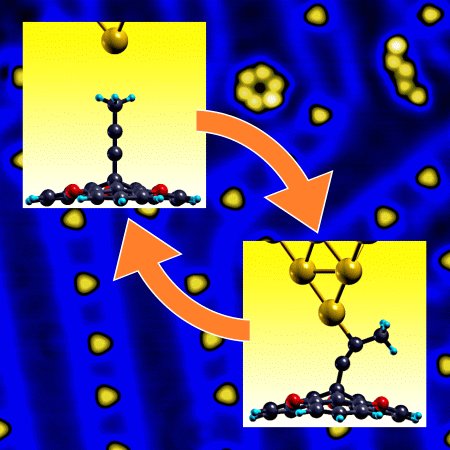
image. © R. Berndt
image. © R. Berndt
September 2017
New SFB 677 report on conductance of molecular wires
Plenty of publications report on the conductance of molecular wires between electrodes. Characterization of the junction geometry, however, is usually missing. We synthesized a molecule for low-temperature STM experiments that stands vertically on a substrate. Despite this reductionist approach, its conductance data turned out to be complex. Calculations show that geometrical changes, orbital symmetries, and bond formation control the conductance. This joint work within SFB677 by Torben Jasper-Tönnies, Aran Garcia-Lekue, Thomas Frederiksen, Sandra Ulrich, Rainer Herges, and Richard Berndt has recently been published in Physical Review Letters and highlighted as Editors' Selection.

Dr. Guillaume Schull
Abb. © CAU Kiel
Abb. © CAU Kiel
Januar 2017
Gaede Award 2017 for Dr. Guillaume Schull
At the meeting of the condensed matter division of the German Physical Society Dr. Guillaume Schull will be awarded the Gaede Preis 2017 for the work performed in the Berndt group. Dr. Guillaume Schull will receive the award for his groundbreaking experimental studies on electrical cantacts to single molecules as well as light emission from such contacts.

May 2015
Cooperation with successful postdoc of SFB 677 continues at international level
Although Yong-Feng Wang left Kiel University five years ago the cooperation with the colleagues from the SFB 677 and the group of Professor Richard Berndt at the Institute of Experimental and Applied Physics still continues. Most recently a joint paper about the vacuum synthesis was published as a cover story of the journal Chemical Communications. Since 2006 Wang worked as a postdoc in the group of Professor Berndt and was involved in numerous publications. 2012 Wang went to Peking University, by now he leads a group at the Key Laboratory for the Physics and Chemistry of Nanodevices, Department of Electronics himself.
show more
In their paper the international group of scientists present tunneling microscopy and spectroscopy data from magnetic magnetic aluminum phthalocyanine (AlPc) which was prepared in ultrahigh vacuum using on-surface metalation from H2Pc. It turns out that AlPc remains paramagnetic on Au(111) with its spin density distributed over the isoindole lobes. “The vacuum synthesis is a powerful method to synthesize air-unstable molecules like the magnetic AlPc molecules we synthesised in our paper”, Wang explains. “In vacuum, the effect by air reactive molecules such as oxygen and water can be excluded.”
“Results like these show how international successful the early career scientists of our Collaborative Research Center are. I am very glad the cooperation with Yong-Feng Wang continues despite the distance between Peking and Kiel”, says Richard Berndt. “My time in Kiel was the most important period in my scientific career“, Wang sums up. “Here I learnt how to find important scientific questions, how to solve them, how to make high-quality scientific figures, and how to write high-level papers.” Since he left Kiel Wang came back for two longer research stays to work with Berndt again. In future, he hopes to set up an international cooperative lab to continue their collaborative work.
Original publication:
Vacuum synthesis of magnetic aluminum phthalocyanine on Au(111) I-Po Hong, Na Li, Ya-Jie Zhang, Hao Wang, Huan-Jun Song, Mei-Lin Bai, Xiong Zhou, Jian-Long Li, Gao-Chen Gu, Xue Zhang, Min Chen, J. Michael Gottfried, Dong Wang, Jing-Tao Lü, Lian-Mao Peng, Shi-Min Hou, Richard Berndt, Kai Wu and Yong-Feng Wang, Chem. Commun. 2016, 52, 10338-10341. DOI: 10.1039/C6CC03359H
November 2016
Two new SFB677 video podcasts online
This video deals with the synthesis of functional or “smart”polymers at the WG Staubitz. These interesting polymers respond to an external stimulus by changing their properties reversibly. Stimuli can be for example light or mechanical force. Such polymers can be used for interesting applications, which are investigated within the Collaborative Research Center 677, which is called “Function by switching”, at Kiel University.
This applied research is part of the second movie "Nanoscale switches for memorizing polymers" of the WG Adelung. The obtained "smart" polymers are used to indicate mechanical stress. In this way the failure of composite materials can be predicted.
hide video

March 2016
PhD thesis prize of the DPG Magnetism Division awarded to Manuel Gruber
During the recent meeting of the condensed matter division of the German Physical Society Dr. Manuel Gruber successfully competed for the PhD thesis prize of the magnetism division (ThyssenKrupp Electrical Steel PhD prize).
show more
Manuel carried out his pioneering studies at the Karlsruhe Institute of Technology with Prof. Wulfhekel and the University of Strasbourg with Dr. Beaurepaire. He explored the impact of molecules on the magnetic properties of inorganic substrates as well as the possibility to switch the magnetization of individual molecules adsorbed on surfaces. As a postdoc with Prof. Berndt he is presently working on related topics within SFB 677.
December 2015
New SFB677 video podcast online: "Ultrafast Molecular Switches Caught in the Act"
Photochemically driven molecular switches are extremely fast: Typically, the switching movement is finished in just 1 picosecond (10‑12 s). To understand molecular switching mechanisms, it is therefore necessary to observe them on a time scale of femtoseconds (10‑15 s). Experimentally, this can be done with modern methods of ultrafast spectroscopy, as applied in the working group of Professor Friedrich Temps. In a complementary approach, the molecular switching dynamics is simulated theoretically in the working group of Professor Bernd Hartke.
hide video
show more
In several combined studies of this kind within CRC 677, the photochemical mechanisms of basic switching molecules like azobenzenes and furylfulgides could be analyzed and understood in all details. This, in turn, allows to systematically improve these molecules, i.e., to develop molecular switches that can be switched from one state to the other more selectively, more efficiently and more robustly. This directly translates in improved applications of these molecular switches, for example in functional materials or as motor units in molecular machines. This podcast illustrates one of these improvement steps: An additional bridge between the two phenyl rings of azobenzene improves its switching properties, by separating the excitation wavelengths for the two switching directions. Additionally, this bridge shortens the molecular movement paths from one state to the other, and it eliminates other molecular movements that would reduce switching efficiency.
image
© DGM
September 2015
DGM Young Scientist Award for SFB 677 Member
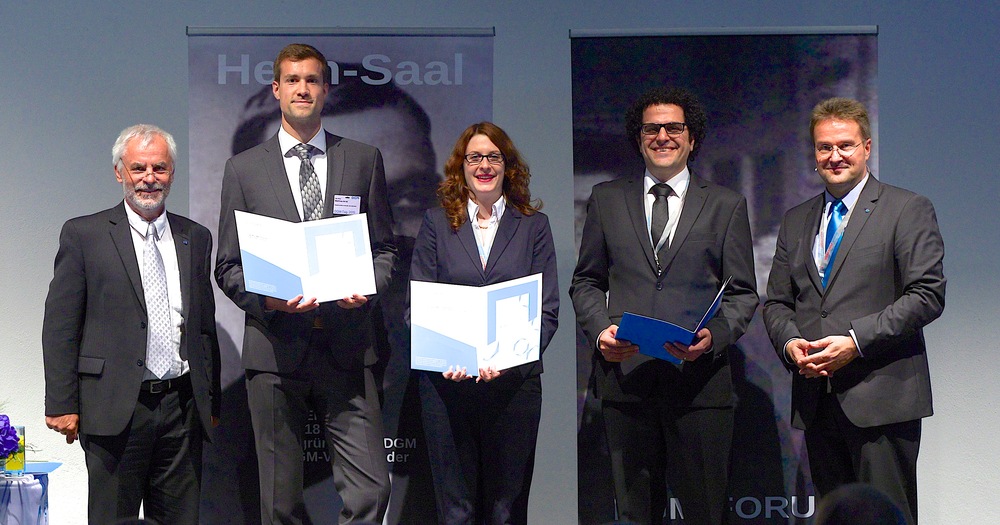
On September 19, Dr. Mehdi Keshavarz Hedayati was presented with the Young Scientist Award of the the DGM (Deutsche Gesellschaft für Materialkunde). Dr. Hedayati has successfully worked on project C01 for several years.
image
© R. Berndt
July 2015
First single molecule potentiometer
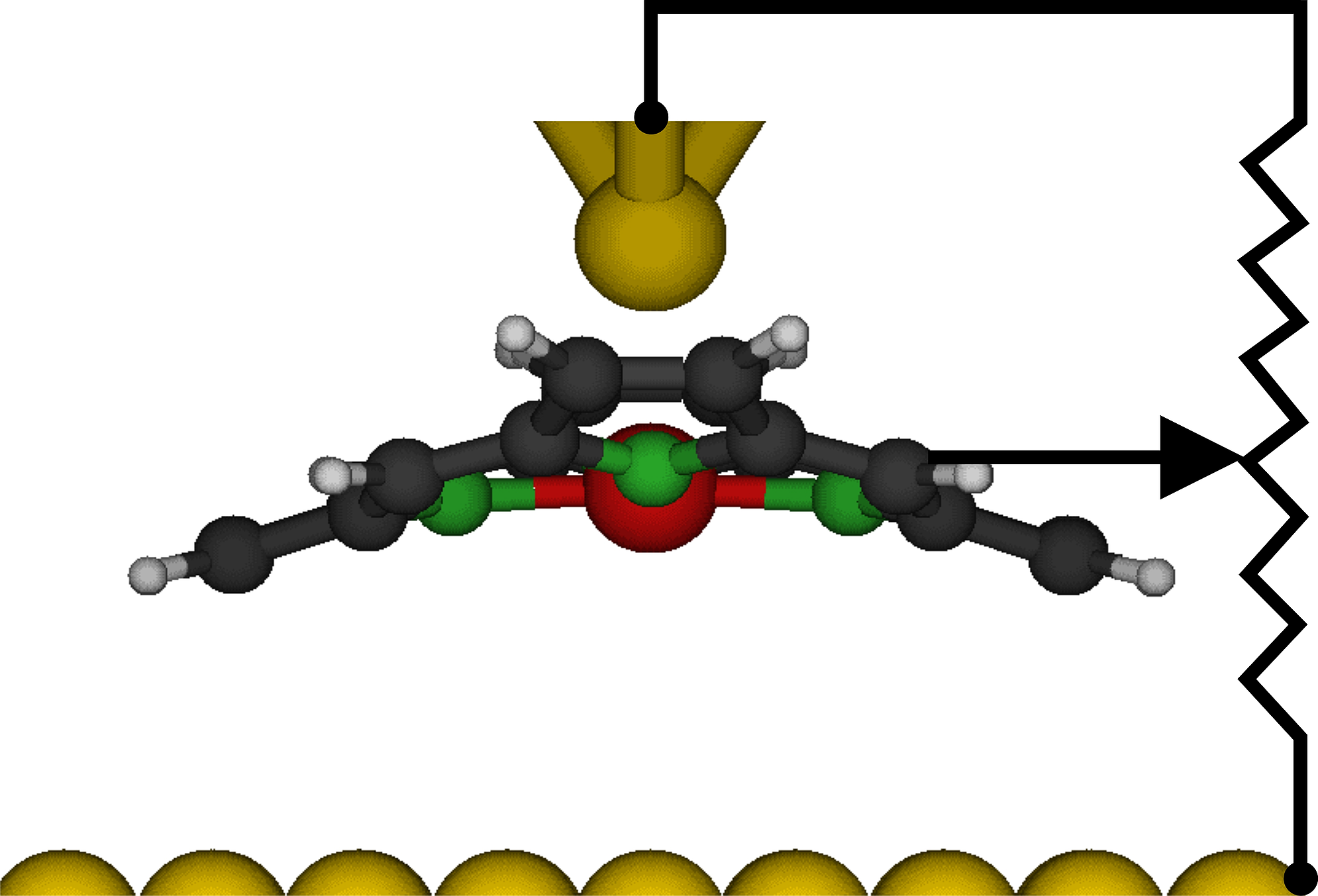
Interpreting electron transport through molecular junctions lies in the broad interest of understanding nanoscale junctions, which are sensitive to both physical and chemical parameters. In a Letter recently published in Physical Review, Sujoy Karan, and colleagues from the group of Professor Richard Berndt, the Max-Planck-Institut für Mikrostrukturphysik and the Universities of Hamburg and Würzburg report how the electrostatic potential is distributed across a junction comprising single molecules coupled to macroscopic electrodes. Contacting a porphyrin molecule on gold in a low-temperature scanning tunneling microscope, they showed a way to utilize a sharp spectral feature to obtain information on the local potential of the molecule. The paper is featured in APS Physics.

photo
© T. Winkler
May 2015
Extension granted by DFG: SFB 677 will continue into the third funding period.
Great excitement at Kiel University: As the DFG (German Research Foundation) announced on May 21, it will continue to support the research on molecules which function like machines with another 8.9 million EUR. The scientists in Germany's northernmost state develop new engineering techniques to build tiny machine-like molecules over the next four years. This ultimate miniaturisation of engineering functions should improve the efficiency of energy conversion systems, medicines, diagnostic methods and materials. Moreover, completely new areas of applications will open up along this line. The Collaborative Research Center 677 (SFB 677) "Function by Switching" now starts into the third and final funding period. Collaborative Research Centers are supported for a maximum of twelve years. They are highly competitive and prestigious flagship institutions at German universities. In total, around 100 scientists from the fields of chemistry, physics, material sciences and medicine collaborate in this Kiel research network.
show more
Pioneering work in the field of molecular machines
A rigorous evaluation by scientific experts preceded the approval of the project. "My congratulations go to the colleagues from SFB 677- they did an excellent job and the DFG recognised their outstanding work", commented Professor Lutz Kipp, President of Kiel University. "For Schleswig-Holstein, and particularly for Kiel University, these federal funds will strengthen the research, improve international visibility and create numerous jobs for highly qualified scientists." The outstanding level of scientific research and the international reputation of the SFB members significantly promoted the formation of the Kiel research focus 'Nano Science and Surface Research'.
From the development of tiny machines for technical and medical applications, the researchers expect a tremendous increase in performance, similar to the revolutionary development in microelectronics and information technology during the last decades. However, the basis for a successful development have to be established first. The Kiel SFB provided fundamental contributions to the molecular nanosciences along this line.
Towards the end of the first funding phase in 2011, the researchers already achieved ground-breaking success. A team under Professor Rainer Herges, spokesperson of the SFB, managed for the first time to control the magnetic state of a single molecule at room temperature - using light at different wavelengths. The tiny magnetic switch is 400 times smaller than the magnetic storage units in state-of-the-art hard disks. Beyond storage applications it will be further developed for the use in minimally invasive stroke and heart operations as well as in MRI diagnostics. "Application oriented research requires a close collaboration of scientists from different areas, says the chemist Rainer Herges.
Kiel's Collaborative Research Center is an international leader in nanoscience
The number of applications for molecular switches is currently growing at an explosive rate and is revolutionising entire scientific fields, such as brain research. But the Kiel labs are still leading in the design and fabrication of functional molecules. Their nanomachines are foremost in efficiency, temperature-resistance and stability. Moreover, Herges' colleagues have been creative and -based on their fundamental research- developed new materials for solar technology, activatable drugs, and improved medical diagnostics. Further applications are being pursued such as the development of construction materials that display fatigue by colour change before they break or fail.Within the last four years the researchers published more than 260 scientific articles in reputed journals and 28 doctoral theses were completed. Two companies have been successfully spun off from the Collaborative Research Center - one develops light technology for scientific experiments and industrial applications; the other produces materials with special functions.
For the final funding phase, which is now beginning, the researchers want to concentrate further on new applications: "We will be collaborating with material and medical scientists", says Professor Rainer Herges. One goal is to develop drugs that only switch on at the site of the disease and therefore avoid side effects in healthy tissues, as well as molecular machines which convert light energy directly into chemical (storable) energy.
June 2015
Research fit for the silver screen: new SFB677 video podcasts online
The shootings in the working groups of the Collaborative Research Center 677 were worthwile: The first three videos of the six part series, which is created in collaboration with the “Beilstein-Institut zur Förderung der Chemischen Wissenschaften”, can now be watched online. They give insights into the fascinating research on antifreeze proteins, molecular data storage and anticancer drugs.
“Fixation of spin crossover complexes on surfaces” is the title of the video from the working group of Professor Felix Tuczek. Building smaller storage devices is a big challenge in industry and calls for innovation. In the podcast, Tuczek and his team show an approach from the design, synthesis of novel transition metal complexes to the fixation of these molecular switches on gold surfaces.
hide Video
June 2015
Research fit for the silver screen: new SFB677 video podcasts online
The film „Switchable Antifreeze Proteins“ from the working group of Professor Frank Sönnichsen is about a mechanism, which lets plants, insects, bacteria and fish survive in extreme cold. The proteins responsible for that are the area of interest of the Sönnichsen group. The film shows how they try to decode the relation between the structure and the functions of AFP, a protein that can be found in Arctic Flounders. Moreover, the project wants to make AFP switchable.
hide Video
June 2015
Research fit for the silver screen: new SFB677 video podcasts online
Along with the third funding period of SFB677 comes a new research project: the third video “Photoswitchable protein kinase Inhibitors for novel anti-cancer applications“ covers Professor Christian Pfeifer and his team’s plan to create photoswitchable protein kinase inhibitors, which will be designed to be employed in novel cancer drugs.
hide Video
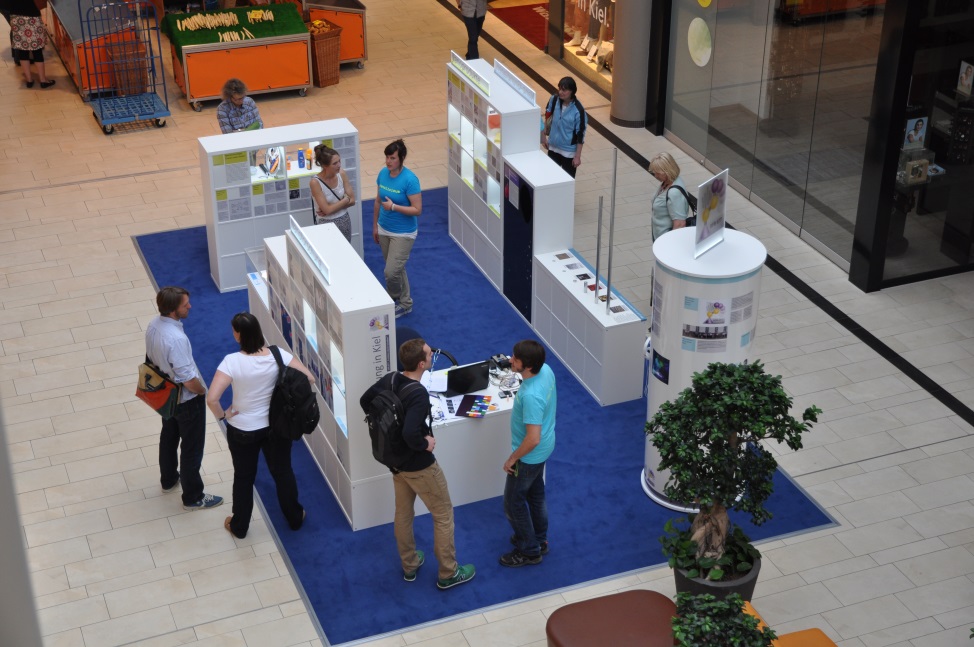
photo © CAU
photo
© CAU
April 2015
The jubilee’s big nano show
Collaborative Research Center (SFB) 677 “Function by Switching” and Kiel Nano, Surface and Interface Science (KiNSIS) take the interested public on a fascinating journey through time in Kiel University’s 350th birthday year. Their multimedia exposition shows the scientific and technical highlights in research from the past, the present and dares to look ahead to the future. “-100 / today / +100” is a concept of the Leibniz Institute for Science and Mathematics Education (IPN).
show more
Based on different modules, the exhibition follows the process of gaining knowledge: starting with the basics of nano and surface science, heading over to research projects and ending with already existing or expected products. Portraits of outstanding scientists of Kiel University, like the Noble laureates Max Planck and Otto Diels, add a personal level to the exhibition. A digital research timeline, presented on a touch table, offers the possibility to dig deeper into the milestones of nano and surface science in Kiel, and thus to develop further connections. Moreover, real scientists explain exhibits and tell about their everyday life at the university.
The exhibition not only looks back on past research projects and illustrates how these have shaped today’s profile of Kiel University, Dr. Lorenz Kampschulte and Dr. Stefan Schwarzer from IPN explain: “At the other end of the time scale, the exhibition ventures a foresight and tries to anticipate, what – using today’s investigation results and an obvious wink – could be possible within the next 100 years, and how this could influence our society.”
The exhibition will be present at several highlight events in 2015:
- 15.-18.04.15 Kiel University presentation at the shopping mall „Sophienhof“
- 22.05.15 Summer festival on campus
- 20.-28.06.15 „kieler uni live“ at Kieler Woche

photo © IPN
photo
© IPN
March 2015
And…action!: CRC 677 shoots second half of video series
Antifreeze proteins, mechanophoric dyes, molecular data storage: These were the main actors in the second part of the video podcast shooting beside the staff of Collaborative Research Center 677’s working groups. Overall, six short films were shot in collaboration with the “Beilstein-Institut zur Förderung der Chemischen Wissenschaften”.
show more
Some plants, insects, bacteria and fish possess proteins, which let them survive in extreme cold. Such proteins are investigated by Professor Frank Sönnichsen and his team. In the video he tells us, how the working group tries to decode the relationship between the structure and the function of the protein AFP. AFP can be found in Arctic flounders. In the CRC 677, the scientists work on making this protein switchable.
Professor Rainer Adelung’s team wants to make material fatigue predictable. “An idea is to incorporate mechanophoric dyes into composite material for failure detection”, Adelung says in the film.
The sixth video tells us about the goal of Professor Felix Tuczek’s working group, which is to develop molecular storage. Its’ approach is to deposit transition-metal complexes on gold surfaces and switch the magnetic properties between two different stable states.
The short English films go online in March and can be watched at the websites of both Beilstein institute and CRC 677.
The film subjects at a glance:
- Working group of Anne Staubitz: Intelligent Polymeres
- Working group of Christian Peifer: Switchable Cancer Drugs
- Working group of Bernd Hartke/Friedrich Temps: Ultra Dynamic Movement of Atoms and Molecules
- Working group of Frank Sönnichsen: Antifreeze Proteins
- Working group of Rainer Adelung: Mechanophore Dyes
- Working group of Felix Tuczek: Molecular Storage
show older news entries
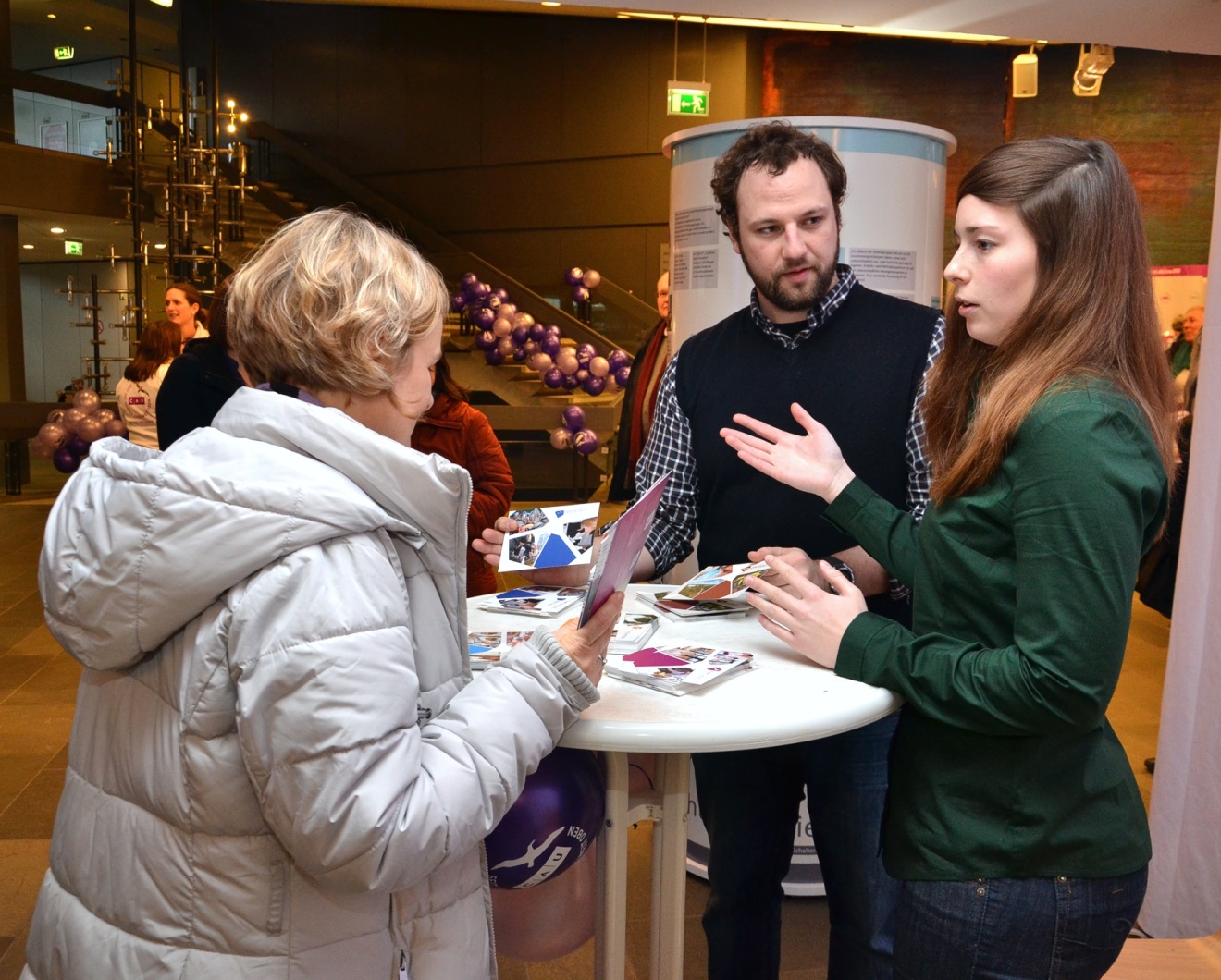
photo © CAU
photo
© CAU
February 2015
„-100 / today / +100“: SFB 677 presents exhibition at jubilee fair
In celebration of its 350th jubilee Kiel University invites the public to over 2000 events including exhibitions, research projects, festivities and conferences. A big exhibition, showing the scientific and technical development of the university, will be contributed by the SFB 677 and Kiel Nano, Surface and Interface Science. Members of both institutions presented the concept of “-100 / today / +100” at a fair in the university’s main auditorium on Wednesday, January 28.
show more
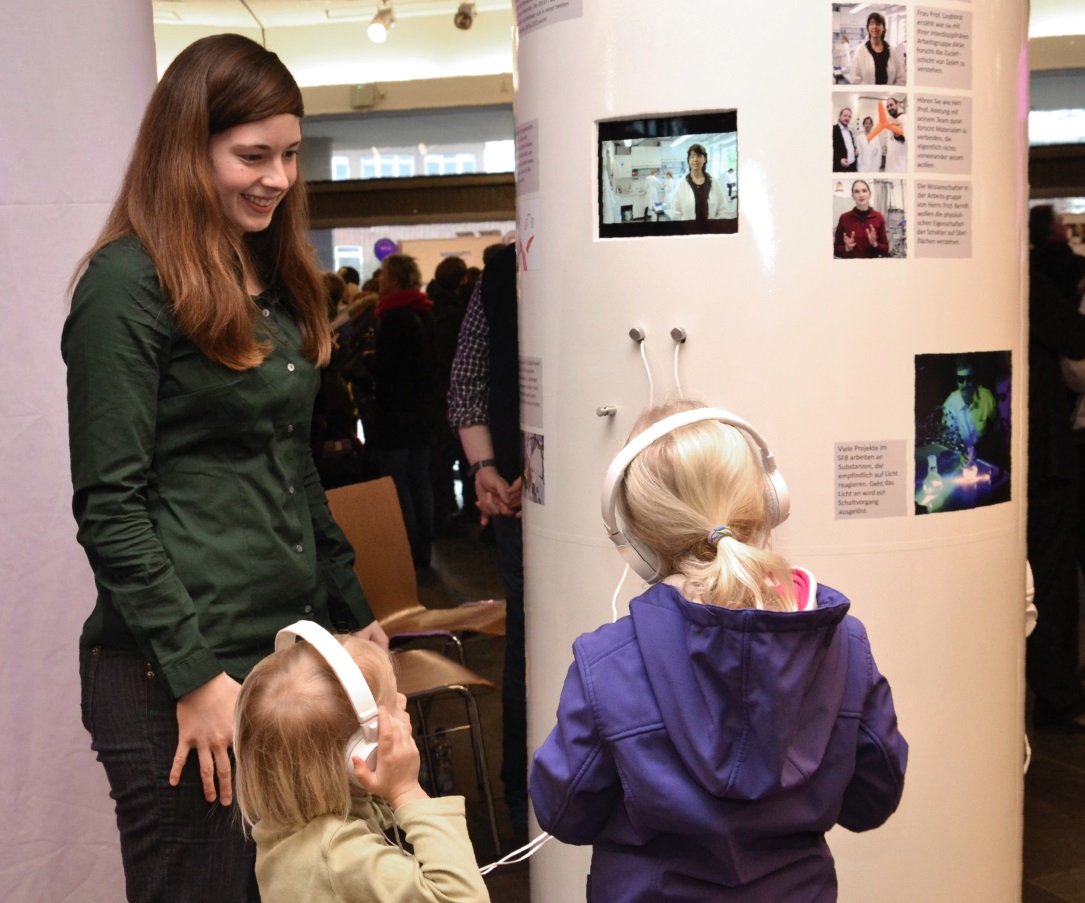
photo © CAU
photo
© CAU
“This is a great opportunity for Kiel University to show – with a manifold portfolio – who we are and to emphasize our connection to the city and the country”, CAU-president Professor Lutz Kipp commented the projects of the university’s members. The nano-exhibition will comprise not only past achievements and their influences on the present, like Max Planck’s quantum theory. It will also deal with products which are already available on the market and discuss future developments.
The exhibition will be shown in different locations. Dates are available at: www.uni-kiel.de/cau350/erleben.
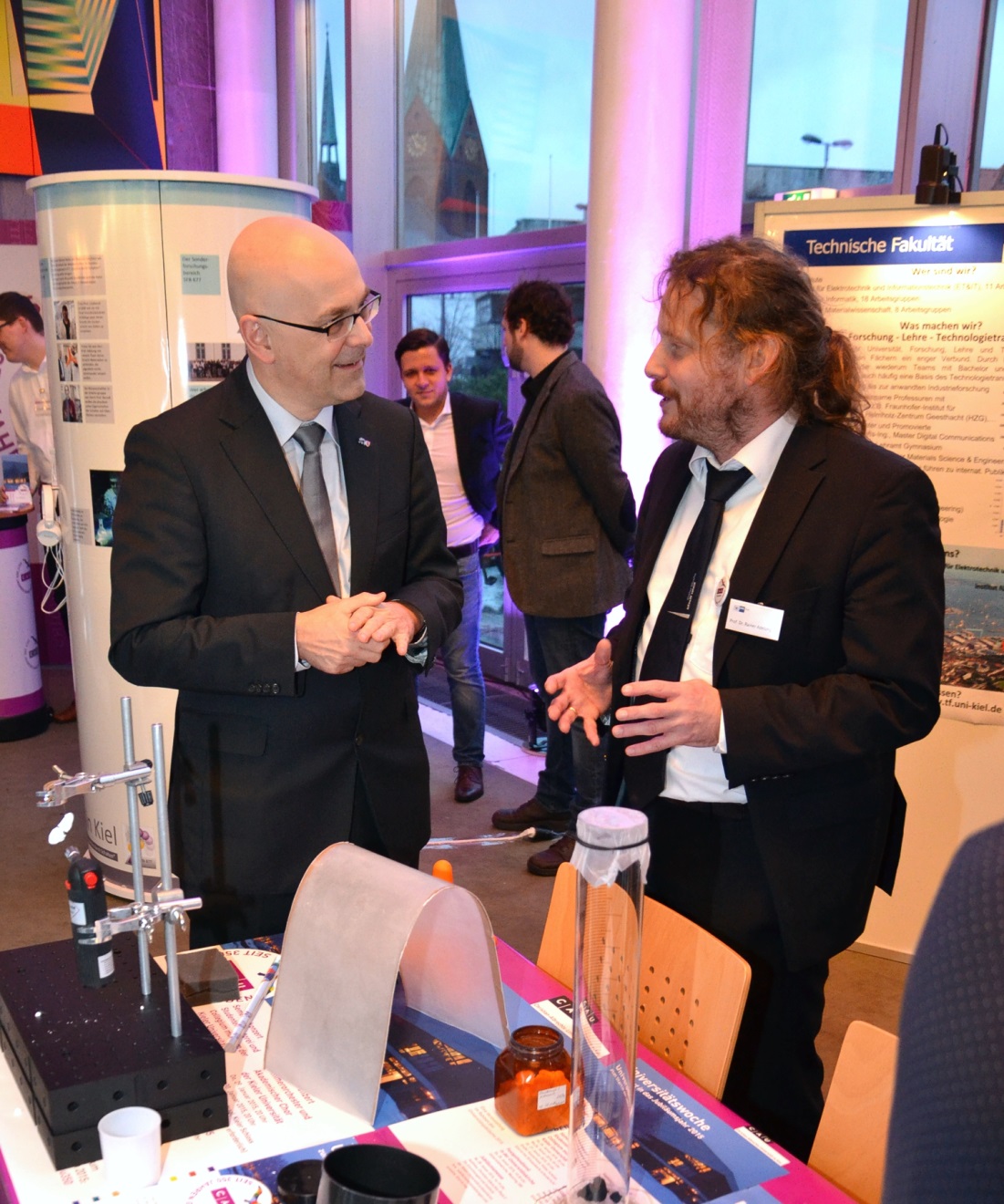
photo © CAU
photo © CAU
January 2015
„Function by Switching“ at IHK’s annual reception
Kick-off for SFB 677’s jubilee exhibition tour: Around 1400 businessmen and politicians gained insights into research on molecular switches at the annual reception of Schleswig-Holstein’s Industrie und Handelskammer (IHK) at the Kieler Schloss.
show more
photo © CAU
photo
© CAU
A multimedia column informed interested guests via pictures, texts and videos about the basics of nano science and the fascinating projects of the SFB. Scientists and students answered questions and made new contacts. “Visitors at our booth were very curious about work in our project. Most businessmen consider top-level research as an important economic factor”, Dr. Stefan Schwarzer from the Leibniz Institute for Science and Mathematics Education said. He and his colleagues are responsible for the SFB’s public relations.
Guests at the Kieler Schloss just got a taste of what is to come in the next weeks: A big nano exhibition, a common project of the SFB and Kiel Nano, Surface and Interface Science (KiNSIS), which will be exhibited in various locations in Kiel. More about its contents will be revealed at Kiel University’s jubilee fair on Monday, January 28, in the main auditorium.
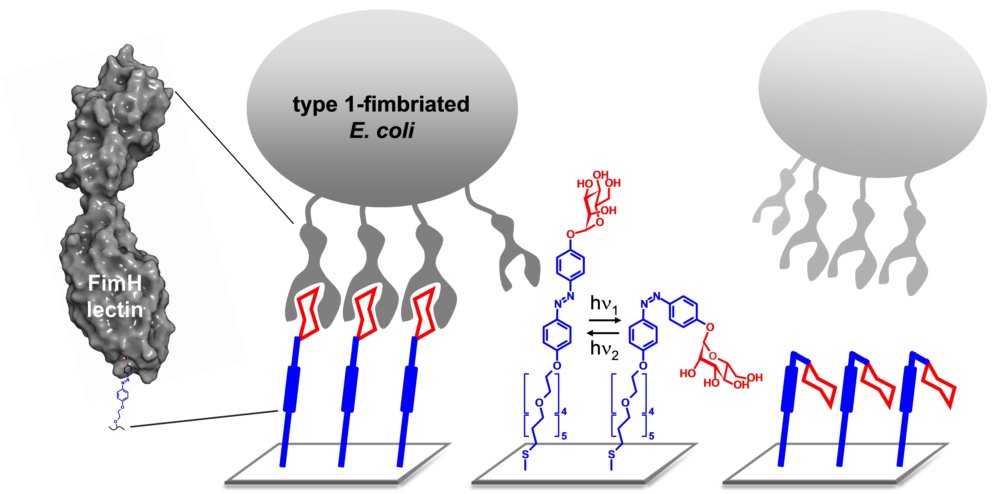
photo © C. Schütt
photo
© C. Schütt
November 2014
Researchers control adhesion of E. coli bacteria
A research team from Kiel University (CAU) and Goethe University Frankfurt have jointly created a synthetic surface on which the adhesion of E. coli bacteria can be controlled. The layer, which is only approximately four nanometres thick, imitates the saccharide coating (glycocalyx) of cells onto which the bacteria adhere such as during an infection. This docking process can be switched on and off using light. This means that the scientists have now made an important step towards understanding the relationship between sugar (carbohydrates) and bacterial infections. Their research results embellish the front page of the latest issue of the renowned journal Angewandte Chemie (Applied Chemistry).
show more
The bond between either cells and other cells or cells and surfaces is vital to organisms, for example in the development of internal organs and tissue. However, these mechanisms are also involved in illness and infections. The E. coli bacteria used in the experiment can cause urinary tract infections, meningitis, sepsis and other severe illnesses. In order to understand and treat these illnesses, researchers need to decipher the molecular processes which allow the bacteria cells to dock onto the healthy host cells.
This often happens by way of proteins, which interact with carbohydrate structures on the surface of the host cell by means of a complex fit principle (simplified: lock-and-key principle). The Kiel/Frankfurt study demonstrates for the first time that the spatial orientation of the carbohydrate structures is crucial to this process. However, in natural glycocalyx, a mere nanometre thick polysaccharide layer covering all cells, the relationships are still too complex to uncover how proteins and carbohydrates identify each other.
In Collaborative Research Center (SFB) 677 'Function by Switching', Professor Thisbe K. Lindhorst, chemist at Kiel University, and her team construct molecules which, when irradiated by light at different wavelengths, operate as biological switches. Together with the working group around the surfaces specialist Professor Andreas Terfort (Frankfurt University), the Lindhorst group has now produced a system with which the orientation of the saccharide docking points, and thus the bonding of E. coli bacteria, can be controlled. To do this, the scientists covered an extremely thin gold surface with a precisely defined saccharide covering, coupled to azobenzene. This is a hydrocarbon containing a nitrogen bridge and operating as a hinge controlled by light. The bonding properties of the saccharide coating can now be switched using this method: if the researchers irradiate their system with light with a wavelength of 365 nanometres, considerably fewer pathogenic bacteria cells can adhere to the synthetic surface. The saccharide molecules turn away from the bacteria, in a sense, and can no longer be recognised. When switched on by 450 nanometre wavelength light waves, on the other hand, the structures reorientate such that the bacteria cells can dock on once again. In this way, E. coli adhesion can be controlled.
'By employing a layer system on a solid surface, in combination with a photo-hinge, the complex dynamics of a real glycocalyx can be reduced to the principal processes and thus be better understood', explains Terfort. 'It should be possible to transfer this novel approach to other biological boundary layer systems.'
'Based on our model system, glycocalyx recognition and bonding effects can be precisely defined and investigated from a completely new angle', says Lindhorst. 'If we can learn how to influence glycocalyx in the context of the relationship between health and healing, it will lead to a revolution in medicinal chemistry.'
Original publication Switching of bacterial adhesion to a glycosylated surface by reversible reorientation of the carbohydrate ligand. Theresa Weber, Vijayanand Chandrasekaran, Insa Stamer, Mikkel B. Thygesen, Andreas Terfort and Thisbe K. Lindhorst. Angew. Chem. 48/2014 DOI: 10.1002/ange.201409808 and 10.1002/anie.201409808 (Angew. Chem. Int. Ed.)
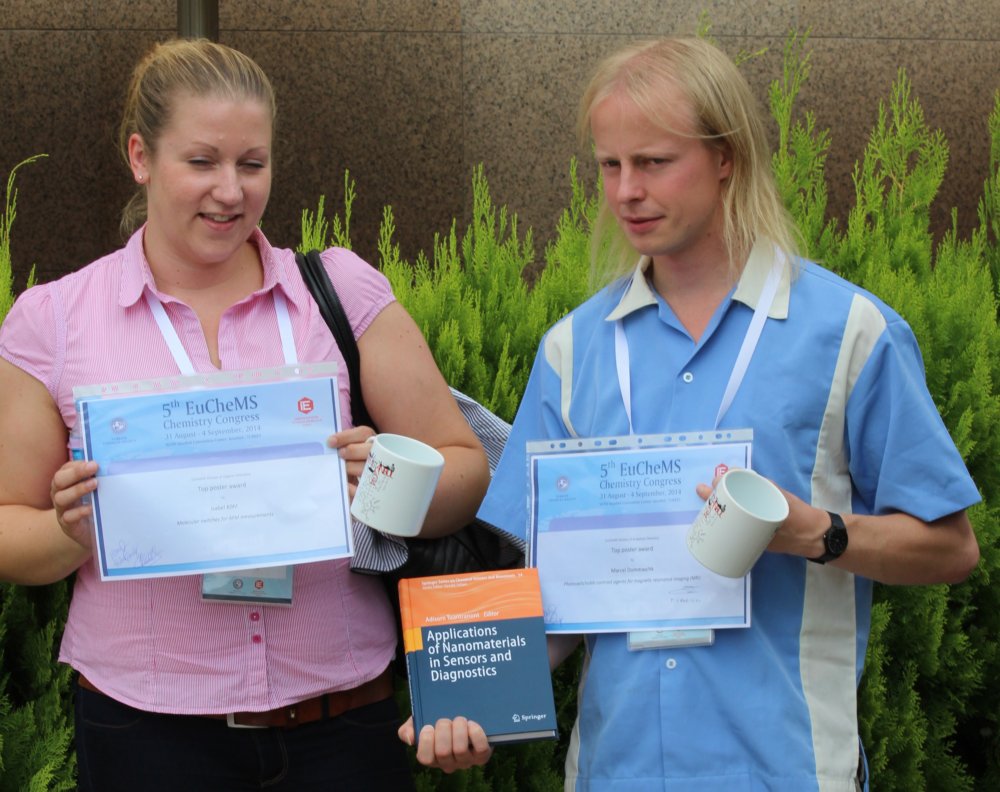
photo © C. Schütt
photo
© C. Schütt
September 2014
Two Poster Awards at EuCheMS 2014 for Chemists from SFB 677
Two poster awards were given to scientists from SFB 677 at this year's conference of the European Association for Chemical and Molecular Sciences" (EuCheMS) in Istanbul. Isabel Köhl and Marcel Dommaschk are currently working on subprojects A05 and A06, respectively, as a part of their doctoral research studies.
show more
Isabel Köhl was awarded the "Top Poster Award" of the EuCheMS division of organic chemistry for her poster "Molecular Switches for AFM Measurements" on her work in Prof. Dr. U. Lüning's group in subproject A05 "Mechanics of the Switching of Single Molecules in Solution".
Marcel Dommaschk is developing novel photoswitchable spin switches for MRI in Prof. Dr. R. Herges' group in subproject A06. He was given the "Top Poster Award" of the EuCheMS division of analytical chemistry for his poster "Photoswitchable Contrast Agents for Magnetic Resonance Imaging" and received an additional book prize.
The EuCheMS conference is one of the largest chemistry conventions in Europe and is held every two years. This year, the meeting took place in Istanbul, Turkey from August 31 to September 4.

photo © pur.pur
photo © pur.pur
August 2014
Let There Be LED: Successful Spin-Off from SFB 677
Proper lighting is crucial for molecules to be operated like machines. Chemist Benjamin Sahlmann has acquired the necessary know-how - and builds his existence on it. His company Sahlmann Photochemical Solutions has been on the market for a year. Kieler Nachrichten recently published a detailed story on this successful spin-off from our SFB 677.
show Unizeit (Kieler Nachrichten) (article in German)
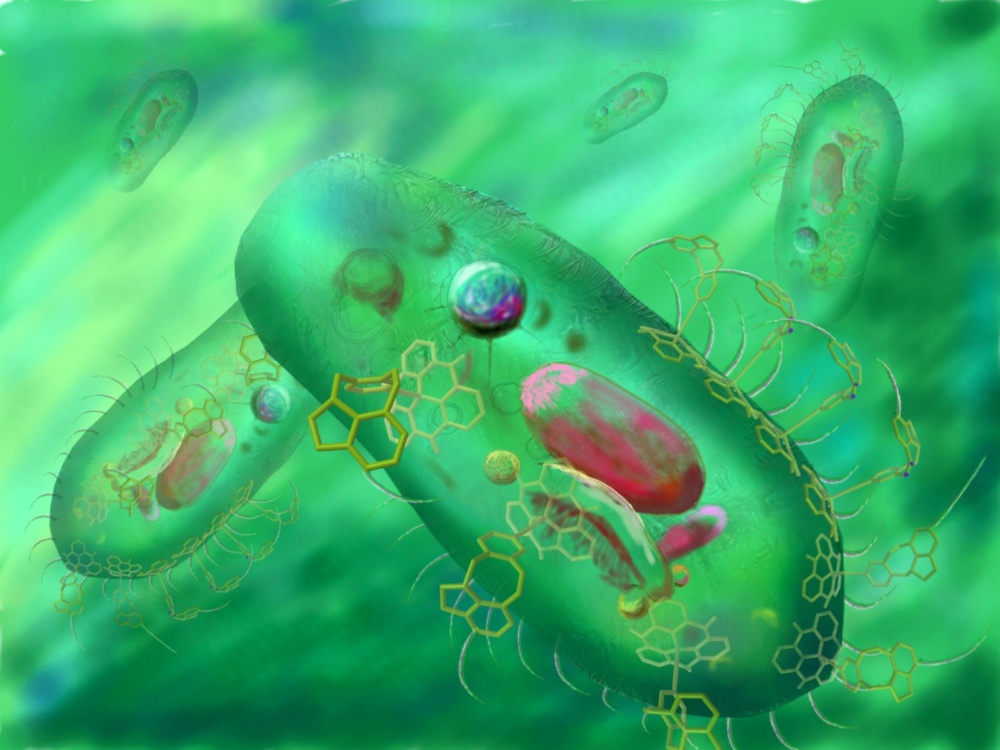
Abb. © Herges
Abb.
© Herges
July 2014
Artificial cilia: Scientists from Kiel University develop nano-structured transportation system
For billions of years, bacteria move along using cilia. These propeling organelles are ubiquitous and they are even found in almost any human cell. Following the natural paragon scientists at the Kiel University constructed molecules that imitate these tiny, hair-like structures. Autonomously moving artificial organelles and a more efficient production of chemical compounds might now be within reach. The researchers recently published their results in the scientific journal “European Journal of Organic Chemistry”.
show more
Cilia, or ciliated epithelia, cover our respiratory tract like a lawn. In our pharynx and nasal mucosa they are responsible for continuously transporting mucus and particles embedded therein towards our throat. (except for heavy smokers, whose cilia where destroyed by nicotine and tar.) Tobias Tellkamp and Professor Rainer Herges have now come one step closer to their aim of artificially reproducing this biological transport system with switchable molecules.
Cilia, or ciliated epithelia, cover our respiratory tract like a lawn. In our pharynx and nasal mucosa they are responsible for continuously transporting mucus and particles embedded therein towards our throat. (except for heavy smokers, whose cilia where destroyed by nicotine and tar.) Tobias Tellkamp and Professor Rainer Herges have now come one step closer to their aim of artificially reproducing this biological transport system with switchable molecules.
Studies have shown that this suction cup adheres very well to gold surfaces. The team of scientists observed that the molecules self-assemble autonomously on the surface, densely packed, side by side like oranges on a shelf. “The suction cups adhere to the surface but they are still mobile and attract one another”, explains doctoral candidate Tellkamp. In this way, an artificial epithelium is formed.
The next logical step is to find out if the artificial epithelium works much in the same way as our nasal mucosa. In collaboration with Prof. Olaf Magnussen in the Physics Department of Kiel University atomic force microscopy (AFM) will be used to visualize the light driven, directed transport of nanoscopic particles. The recent findings are particularly interesting, not only with respect to fundamental research. With artificially ciliated epithelia, a molecular nano-fabrication seems possible – machines of molecular size would build other machines by positioning chemical products specifically and precisely. Entire production plants could thus fit onto a tiny chip. Other conceivable fields of application include artificial organelles equipped with molecular cilia that are controlled by an external stimulus; or in the more distant future, they could operate autonomously within the bloodstream and carry drugs to the site of a disease.
Original publication:
Tobias Tellkamp, Jun Shen, Yoshio Okamoto and Rainer Herges. Diazocines on Molecular Platforms. Eur. J. Org. Chem 2014. DOI: 10.1002/ejoc.201402541 (online publication)
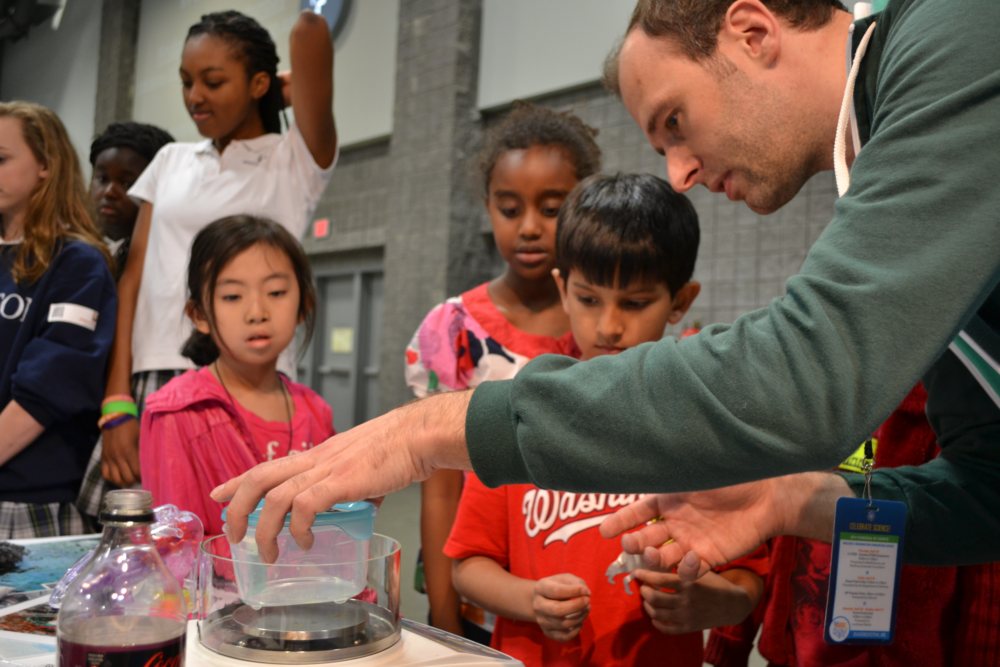
Photo © DFG
Photo
© DFG
June 2014
SFB 677 at 3. USA Science & Engineering Festival in Washington D.C.
at the booth of DFG's North American office
The collaborative research center (CRC) 677 was part of a presentation of the German Research Foundation (DFG) at the 3. USA Science & Engineering Festival in Washington D.C. from April 25-27. More than 325,000 visitors could experience the fascination of science and engineering at over 3,000 hands-on experiments and 150 stage performances. A detailed review is available on the DFG's website.
show DFG homepage

Photo © Eulitz/CAU
Photo
© Eulitz/CAU
June 2014
Nano Research at the Shopping Mall
Interactive Exhibition at the "Sophienhof" in Kiel from June 3 to 7
For one week, visitors of Kiel's "Sophienhof" shopping mall will be able to experience state-of-the-art research in nanoscience first-hand. From June 3 to 7, an exhibition named "Nano Research in Kiel" shows all things nano from fundamentals to applications of nanotechnology. Anyone can participate in experiments or watch junior scientists at work.
show more
The exhibition was conceived and prepared by the collaborative research center (SFB) 677 "Function by Switching" at Kiel's Christiana Albertina University (CAU) and the Leibniz Institute for Science and Mathematics Education (IPN). "We provide unique insight into our work on molecular machines for young and old", explains Professor Rainer Herges, chairman of SFB 677. "You can meet real scientists and discuss their current research as well as opportunities and risks of nanotechnology." The combination of video, photos, text, various exhibits and small live experiments is open to the public from 10 a.m. to 8 p.m. on the ground floor near Herzog Friedrich Strasse between Schuh Heinrich and Peek & Cloppenburg stores.
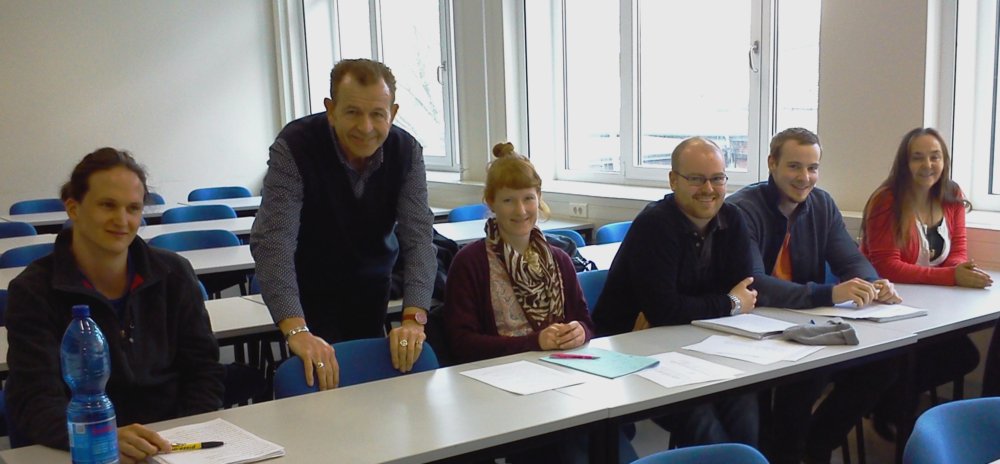
Photo © A. Staubitz
Photo
© A. Staubitz
April 2014
English Language Training Completed Successfully
This year, there is again the opportunity for graduate students of the special research area to join the English course with Gary Owston, a voice teacher from Bristol, UK. The course lays the foundations of good English pronunciation, and then quickly delves into presentation techniques in English, both for poster and oral presentations.
show more
“You cannot tell your voice to change – you have to do it!” Gary Owston explains. Therefore, to ensure continuous practice, there are four instalments of the course spread out over the year. The first one was held for two days in April and will be soon followed by a second one in June. In the meantime, the participants were given homework and study materials to practise by themselves, so that hopefully, everyone can progress to the next stage of their training.
February 2014
Third Podcast online: "Molecules as Nanomachines?"
In Prof. Berndt's workgroup in SFB 677 at the CAU Kiel, scientists are interested in the physical properties of single switchable molecules on surfaces.
hide video
show more
Without taking notice, we use various nanometer-sized structures in everyday life. For example, the smallest circuit paths in computer chips will soon reach a width of 14 nm, which means only 60 atoms. The size of these structures are approaching a limit where the laws of physics change fundamentally.
For example, we know from experience that copper wires are better conductors than wires made of lead. The exact opposite is true for wires which are only one atom wide. Our research aims at a better understanding of the behavior of single molecular switches on surfaces. This knowledge is crucial for the application of molecules as nanomachines.
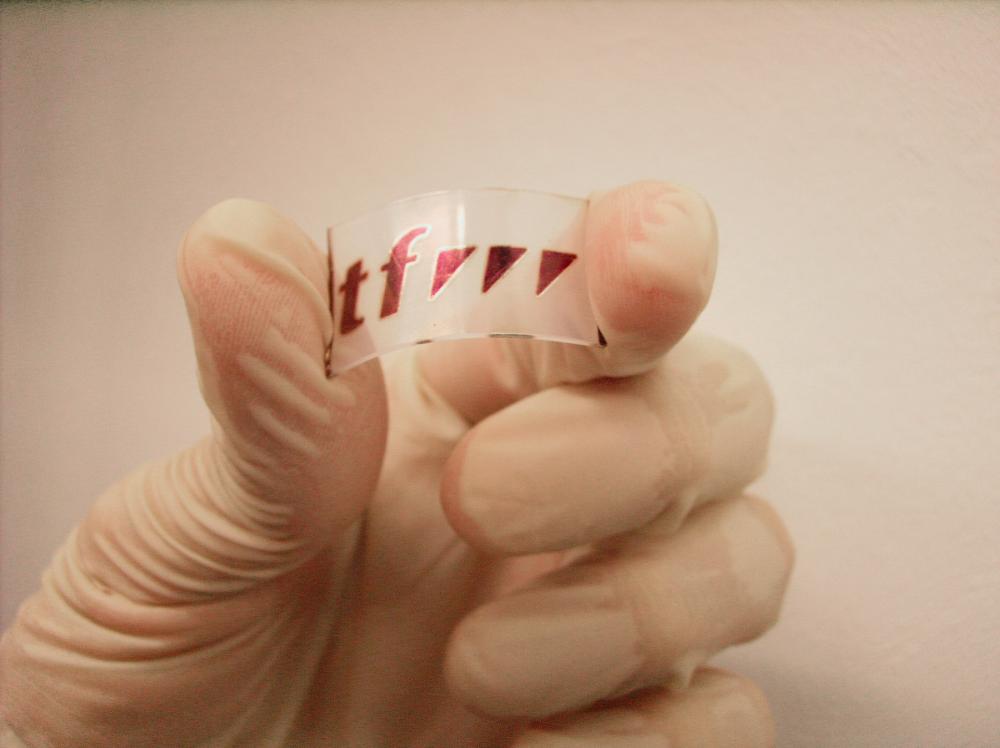
Photo © Schimmelpfennig/CAU
Photo
© Schimmelpfennig/CAU
February 2014
Researchers develop ultrathin perfect UV light absorber
New metamaterial to improve solar technology
Ultraviolet light (UV) has not only harmful effects on molecules and biological tissue like human skin but it also can impair the performance of organic solar cells upon long-term exposure. Researchers of Kiel University and Helmholtz-Zentrum Geesthacht have now developed a so-called plasmonic metamaterial, which is compatible with solar technology and completely absorbs UV light – despite being only 20 nanometers thin. It is one of the first metamaterial perfect absorbers designed for such high frequency. The study was recently published in the renowned scientific magazine “Applied Physics Letters”.
show more
"Metamaterials are artificial materials composed of designed unit cells which can show striking and unique electromagnetic properties not inherent in the individual constituent components. These artificially structured composites could potentially fill the gap in the electromagnetic spectrum where material response is limited and facilitate the building of new devices", explains Mehdi Keshavarz Hedayati, member of the group Nanochemistry and Nanoengineering at Kiel University and first author of the paper.
The researchers designed a structure that is composed of three main layers. The top layer, which is exposed to the light, is a nanocomposite wherein nanoparticles of silver, with an average diameter of 5 nanometers, are dispersed in a silicon dioxide matrix. A silicon dioxide film and a silver film constitute the second and third layer. In this stack, the whole UV-A light gets absorbed due to the intelligent structural design: the silver film (bottom layer), functioning as a mirror, multiplicatively reflects the incident light which interacts with the silver nanoparticles and gets absorbed or scattered. Additionally, light destructively interferes between the layers and hence reduces the reflectance. A strong light confinement between the small gaps of the particles due to collective oscillations of the conduction electrons of the nanoparticles, so-called surface plasmons, adds it all up to a perfect absorbing material.
"We have had already shown the high absorption of this class of metamaterials in our previous articles but here, we shifted the operation frequency of our former perfect absorber to a higher frequency (UV) by replacing gold or copper by silver", Professor Mady Elbahri says, head of a joint research group of Helmholtz-Zentrum Geesthacht and Kiel University and leader of the project. "The fabrication of any metamaterial to operate in UV frequency is a very hard task with the existing nanolithography based methods. Our designed metamaterials are fabricated with co-sputtering which is a routine technique in thin film technology and that makes our idea applicable for large scaling."
In organic solar cells, degradation of the cells by long exposure to sunlight (i.e. UV exposure) is a challenging problem, which limits the application of organic cells. Therefore, a material that totally blocks the UV light could principally improve the durability of this class of solar collecting materials. "Since our perfect absorber can be deposited on even flexible substrates, we envision that this structure can be potentially used also in thin film solar panels which are intended to be used in next generation clothing industry", Hedayati adds. The researchers’ metamaterial stays highly absorbent even at oblique light incidence which is very advantageous for their potential application for solar energy.
"The current approach is enjoying ease of fabrication and its large scaling is relatively cheaper compared to other metamaterials fabrication methods." say Professor Franz Faupel and Dr. Thomas Strunskus from Kiel University’s Multicomponent Materials research group, coauthors of the study. “We still have to work, though, to improve the system’s performance and stability in harsh environments”.
Nevertheless, it is conceivable that the new concept will find application in many other fields than solar technology as well. In medicine, for instance, where it could be used in sensors to detect cancer pathogens in the human body.
The idea brought Professor Mady Elbahri the special prize of the Schleswig-Holstein "ideas competition" in 2012. The work on the absorber also brought Mehdi Hedayati the "Khwarizmi Youth Award", a prize given to young Iranian researchers by the Iranian Ministry of Education for outstanding achievements.
Original publication:
Plasmonic tunable metamaterial absorber as ultraviolet protection film.
M. K. Hedayati, A. U. Zillohu, T. Strunskus, F. Faupel and M. Elbahri, Appl. Phys. Lett. 104 , 041103 (2014), DOI: 10.1063/1.4863202

Photo © Holger Naggert
Photo © Holger Naggert
February 2014
Success in future data storage
Team of scientists at Kiel University has found a way to control magnetic states in molecules with light
Scientists at Kiel University have achieved another breakthrough on the way towards data storage on a molecular level. They have managed to switch the magnetic state of an ultrathin film of molecules on and off with the aid of light. The Collaborative Research Centre 677 "Function by Switching", funded by the German Research Foundation (DFG), recently published this result in the renowned scientific journal “Angewandte Chemie”.
show more
Thin layers of magnetically switchable compounds play an important role in data storage and in electronic devices in general. Normally these layers consist of crystalline materials, which are evaporated onto ever-smaller devices at high temperatures in ultra-high vacuum environments. Until now it had not been possible to use magnetic molecules for these purposes, since they usually disintegrate under those conditions.
The team of scientists working at the Collaborative Research Centre 677 "Function by Switching" has discovered that a particular class of molecules – so-called spin crossover complexes – can be evaporated and vacuum-deposited as thin films retaining their characteristic properties. Through external stimuli such as pressure and temperature the magnetism of these molecules, which contain an iron atom, can be switched on and off. A major advantage of this molecular film compared to crystalline solids lies in the fact that it may be applied to flexible materials and could lead to storage units with a higher storage capacity.
Felix Tuczek, Professor at the Institute of Inorganic Chemistry, and Lutz Kipp, Professor at the Institute of Experimental and Applied Physics, along with their team, proved that the magnetism of a seven nanometre thin film – which contains about six layers of these molecular complexes – could be switched by exposure to light. For this experiment, they used an ultraviolet photoelectron spectrometer by which the electronic structure of these compounds can directly be investigated under ultra-high vacuum conditions. Prior to this, scientists from Kiel had already succeeded in controlling the magnetic state of single molecules in a single layer by injecting electrons.
“Our progress in making this class of molecules act as tiny magnetic memories opens up opportunities for new technical applications”, says Tuczek. At this stage, the magnetic state can be controlled only in an environment of about minus 170 degree Celsius. The next goal would be to realize a switchable film of molecules at room temperature, he adds.
The Collaborative Research Centre 677 has already produced a series of spectacular findings in the past. One of them was the synthesis of a molecular machine that works in a way similar to a record player and whose magnetic state can be switched in liquids at room temperature. Novel applications such as a switchable contrast agent in MRT (magnetic resonance tomography) may thus become possible. The common denominator in these research activities is the goal to transfer magnetic features of crystalline solids to single molecules and ultrathin molecular films. In this research area, the Collaborative Research Centre 677 at Kiel University is now an international leader.
Original publication:
E. Ludwig, H. Naggert, M. Kalläne, S. Rohlf, E. Kröger, A. Bannwarth, A. Quer, K. Rossnagel,L. Kipp und F. Tuczek (2014): Fe(II) spin-crossover complexes in ultrathin films: Electronic structure and spin-state switching by visible and vacuum-UV light. DOI: 10.1002/ange.201307968
Februar 2014
"Nano erleben" Competition: Great Finale on March 27th
Save the date: On Thursday, March 27th, the nationwide competition “Nano erleben 2014” (experiencing nano) will choose its winners. This year, the Collaborative Research Center 677 in cooperation with the section nanotechnology of the DECHEMA Society for Chemical Engineering and Biotechnology organizes the competition. Nine experiments, selected by an international jury of professionals, will be presented live by their inventors to the audience. The best four of them will be awarded prizes worth a total of 2,700 Euro, endowed by the Research Focus nano sciences and surface research of Kiel University. Various guided tours to laboratories an campus, lectures and an exciting nano show are also part of this event.
show more
The programme on March 27th:
- 10.00 Uhr: Welcome by Prof. Dr. Rainer Herges
- 10.15 Uhr: Lecture on „Extreme Materials from Nanotechnology“ (Prof. Dr. Rainer Adelung)
- 10.45 Uhr: Presentation of the competitors‘ experiments
- 12.30 Uhr: Lunch and experiment fair
- 13.30 Uhr: Laboratory tours on campus
- 16.00 Uhr: Award presentation and show „Touching nano: soap bubbles” (Dr. Björn Böttcher)
Everyone interested is cordially invited to the finale of „Nano erleben“. You can sign in and book lab tours by filling in the form on the competition's flyer or by sending an email to kontakt@nano-erleben.de. Participation is free.
If you want to take part in the competition by contributing an experiment, you can still do that till February 16th. Just send a description of the experiment and a short presentation of yourself or your project group to kontakt@nano-erleben.de. The competition is open for students, teachers and young scientists of all disciplines.
October 2013
Molecular Machines in Berlin
CRC 677 and 658’s International Symposium on Photochromism great success.
The "International Symposium on Photochromism 2013" (ISOP) from September 23 to 26 at the Humboldt-University Berlin attracted the world’s leading experts in this field. The conference, which was organised by both Kiel’s Collaborative Research Center (CRC) 677 and Berlin’s CRC 658, was held in Germany for the first time in its 20 years of history. More than 200 participants exchanged ideas about state-of-the-art research on molecules, which can be switched by light.
show more
Physicists, chemists and biologists presented different facets of photochromism during their 36 talks and with numerous scientific posters. Moreover, guests from Japan, Norway, the USA, Canada, France, Italy, the Netherlands and Germany also contributed several highlights: tiny biological motors, which can be moved and controlled by light, miniaturised laboratories, artificial photoreceptor cells and local anaesthetics, which can be activated by light.
"Our basic research on molecular machines spawns tangible and diverse applications in the most important social areas: medicine, energy, ecology", Professor Rainer Herges, CRC 677’s speaker and co-organiser of the conference, was happy to state considering the range of presentations. The Kiel scientists presented their work on photo-switchable contrast agents for clinical diagnostics to the international audience. In the long term, these machine-like molecules could be applied in surgeries on stroke and heart attack patients where catheters are used. As a replacement for x-ray imaging, they could also substantially reduce radiation exposure.
ISOP, as a platform for exchanging ideas, has also triggered many new projects. For CRC 677 at Kiel University, this resulted in new cooperations with partners from Germany, Italy and Japan. “The symposium was an excellent experience especially for young researchers, who could discuss ideas with the world’s leading experts on photochromism”, Herges concluded.
October 2013
Beilstein-TV Reports on "Record Player Molecules"
A new episode from Beilstein TV reports on the development of switchable contrast agents for magnetic resonance imaging (MRI) in the workgroup of Prof. R. Herges.
hide video
show more
The movie shows the collaboration between organic chemistry and neuroradiology at the university medical center Schleswig-Holstein to foster the development of switchable MRI contrast agents. The synthesis of the so-called "record player molecules" in the laboratory as well as the envisioned clinical application are demonstrated.

September 2013
Poster Awards for Projects from SFB 677
Two posters from quite different areas of the collaborative research center 677 "function by switching" have been decorated with poster awards in the past weeks.
show more
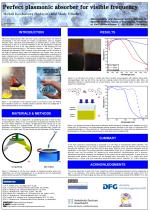
Mehdi Keshavarz Hedayati presented his poster "Perfect plasmonic absorber for visible frequency" at "Metamaterials 2013". The conference dedicated to novel electromagnetic materials was held at Bordeaux from September 16 to 19. Mehdi Keshavarz Hedayati works as a Ph.D. student in CRC 677's subproject Teilprojekt C09 "multifunctional photoswitchable polymer fibers" in Prof. Mady Elbahri's group at the faculty for engineering. He won the first prize in the category "student poster".
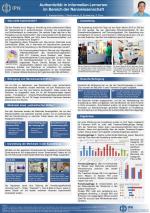
Lorenz Kampschulte was awarded the poster prize of the society for the didactics of chemistry and physics (GDCP) at their annual convention in Munich. His poster "Authentizität in informellen Lernorten im Bereich der Nanowissenschaft" ("authenticity in informal learning locations in the field of nanoscience") showed results of the conceptual design of CRC 677's exhibition at this year's "Kieler Woche". As a member of subproject Ö he deals with the implementation as well as the investigation of the public outreach activities of CRC 677.
September 2013
Contest "Nano erleben" on a Quest to Find the Best Experiments
Building tiny molecules that work like machines: That's the goal of the scientists of the CRC 677 "function by switching". This year, the CRC is hosting the contest "nano erleben" ("nano experience") in collaboration with the nanotechnology section of DECHEMA society for chemical engineering and biotechnology. We are looking for demonstration experiments in the field of nanoscience and technology. The best nine ideas will be decorated with awards totaling at 2700 euros.
September 2013
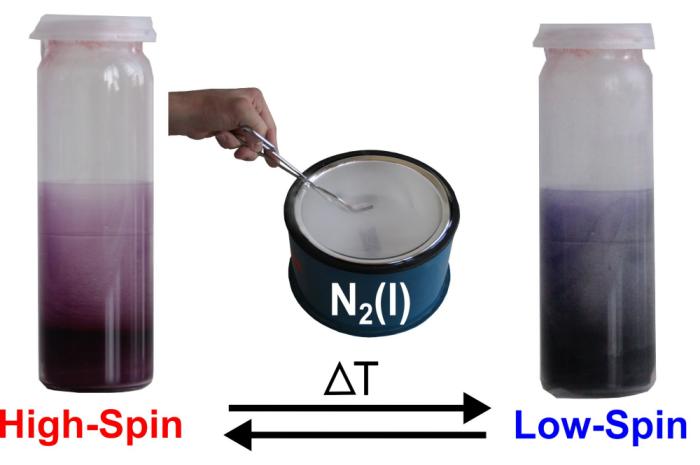
New Demonstration Experiment with Photochromic Iron Complexes
Scientists from SFB 677's workgroups of Prof. Tuczek (inorganic chemistry) and Prof. Parchmann (Leibniz institute for science and mathematics education / IPN) developed a new demonstration experiment suitable for the student lab as well as high school senior classes.
show more
The variation of temerature induces the color change of an iron(II) complex from pink to green which goes along with a change of its magnetic state. These impressive reversible effects can help chemistry teachers explain thermochromism and magnetic behavior to their classes.
Switchable spin crossover complexes as potential teaching materials are dicussed in a paper recently published online. A more detailed description of the experiment can be seen in our new video as well as the soon to be published follow-up article titled „Synthetic blood – synthesis of a magnetically switchable iron complex“.
August 2013
International Conference ISOP 2013 co-hosted by SFB 677
For more information see the conference website.
The ISOP series is a string of triannual events that are hosted on different continents and showcase the breadth of research on (organic) photochromism. After the very successful last two symposia 2007 in Vancouver and 2010 in Yokohama, this upcoming event in Berlin (September 23-26) will carry on the tradition and highlight the most recent results and trends in the burgeoning area of photochromism research.
show more
The symposium will gather the world’s leading experts in the field and cover all aspects from the design of photochromic molecular systems all the way to their utilization in photoactive materials and photoswitchable biological tools. The symposium will be completed by a one-day meeting of the PHENICS network, to further strengthen the international collaboration on this topic and provide an additional opportunity especially to young researchers to present their research.
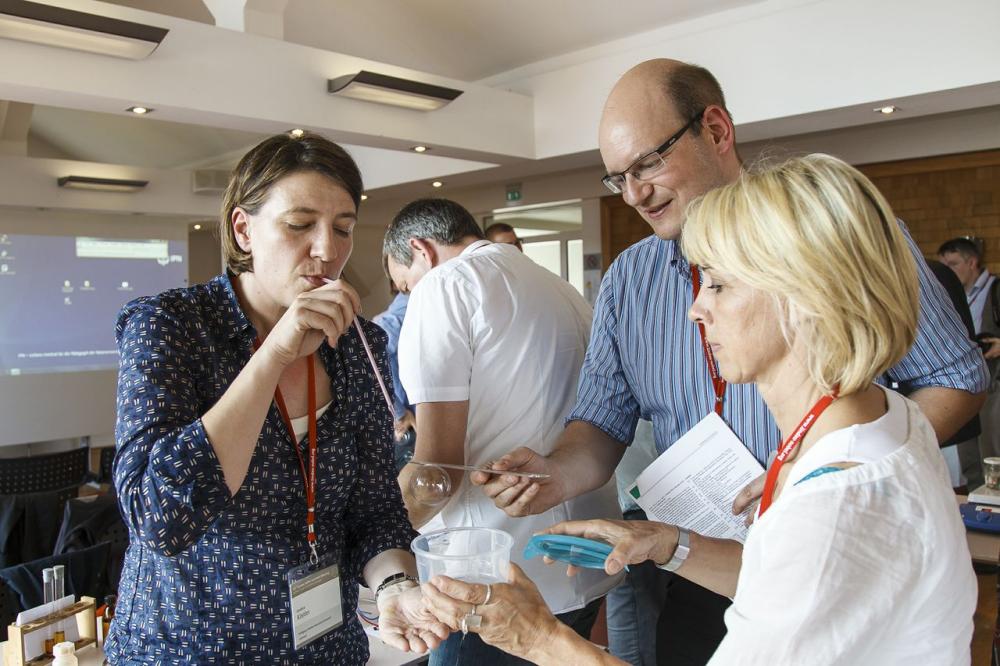
Photo © Kuratorium f. d.
Tagungen d. Nobelpreistr.
in Lindau
July 2013
CRC 677’s klick! laboratory introduced at Lindau Nobel Laureate Meeting
21 chemistry teachers who in the past committed themselves exceptionally to promoting their students were invited to the 63rd Lindau Nobel Laureate Meeting (June 30 to July 5). In order to give them fresh impetus on how to promote young talents, the Leibniz-Institute for Science and Mathematics Education (IPN) and the meeting’s council had arranged a special training programme (“Teaching Spirit”). During that, the teachers could find many inspirations for their own classes at the presentation of klick!, a student laboratory offered by Kiel University’s Collaborative Research Center (CRC) 677 “Function by Switching”, and the “Experimental Game Science”, a project supported by the Schleswig-Holstein ministry of science.
show more
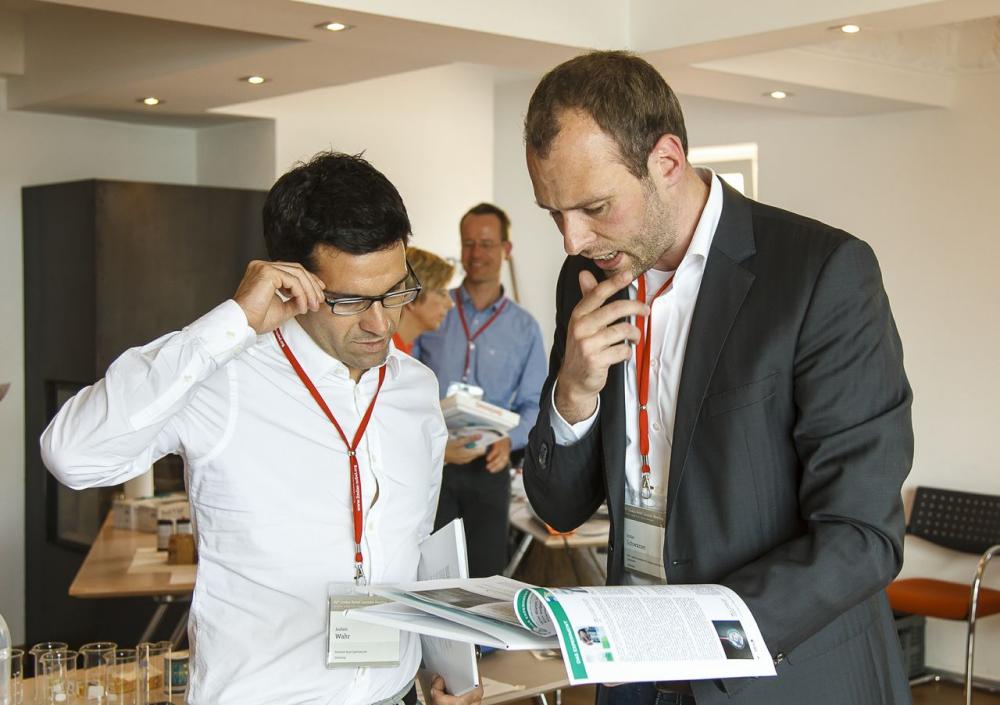
Photo © Kuratorium f. d.
Tagungen d. Nobelpreistr.
in Lindau
What are the best ways to promote students of the natural sciences inside and outside schools? This question was raised by Dr. Stefan Schwarzer and Wilfried Wentorf from IPN and discussed with the teachers. Schwarzer and Wentorf had brought with them the concept of the klick! lab, which gives students and soon-to-be teachers insights into the work of the top level researchers of the CRC 677. The chemistry teachers tested various experimental stations about molecular switches, magnetic fluids and bionics, which bridge the gap between teaching and research.
“Our project’s aim is to make current and important research generally accessible in a motivating manner”, Schwarzer explained. Both sides would profit, if schools worked together with extracurricular education institutions: “The klick lab offers an excellent opportunity for teachers who want to promote very talented students. At the same time we awaken interest for a career in the natural sciences at an early stage”, Wentorf said.
Not only were the teachers convinced of the presentation of the concept made in Kiel, but the meeting’s council as well: From now on, Lindau Nobel Laureate Meeting’s council and IPN will work together closer in the areas of talent management and the authentic imparting of research in the natural sciences.
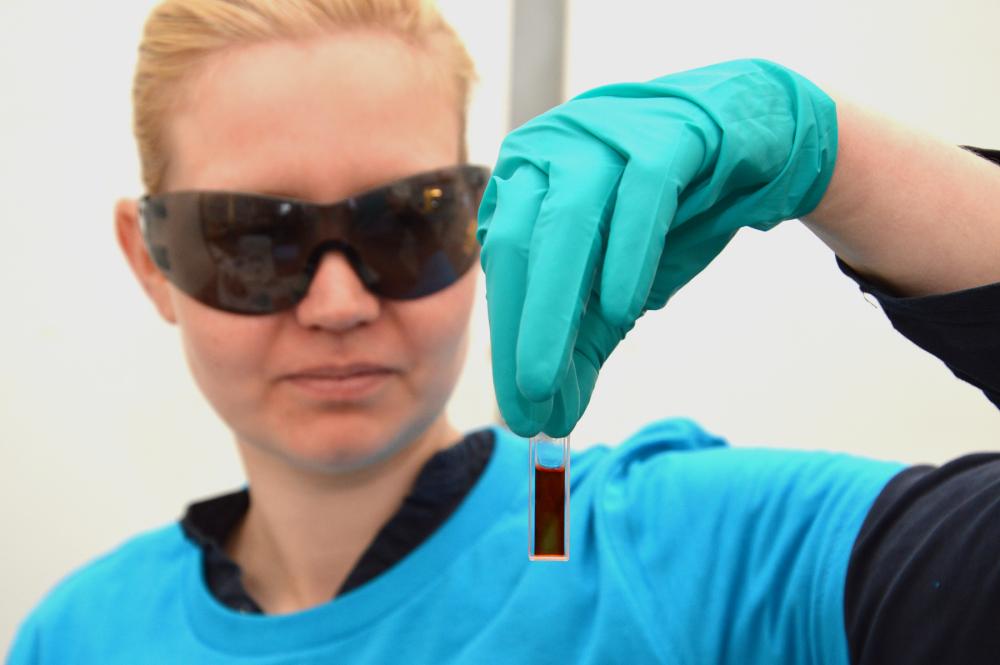
Photo © CAU
June 2013
Getting a grasp and glimpse of „nano“
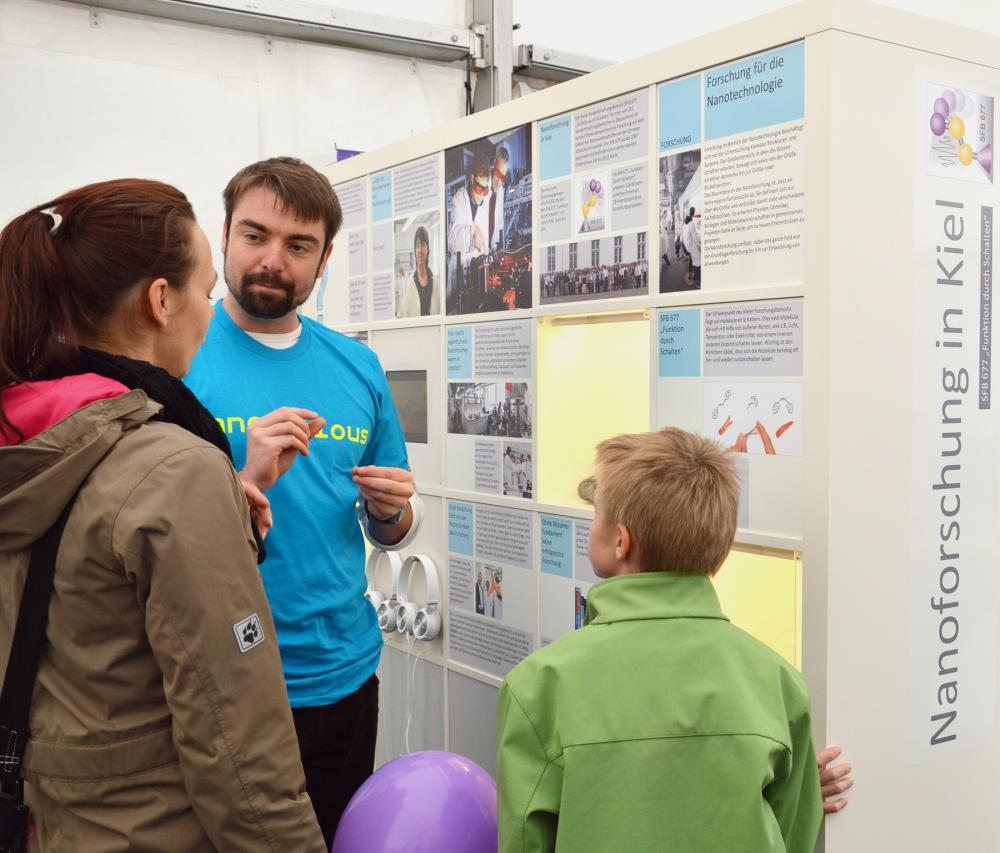
The student laboratory klick! and a multimedia exposition represented Kiel University’s nanoscience during the Kieler Woche at the Kiellinie. Guests could operate chemical switches and learn where to find nanotechnology in everyday products in the tent of the “kieler uni live”.
show more
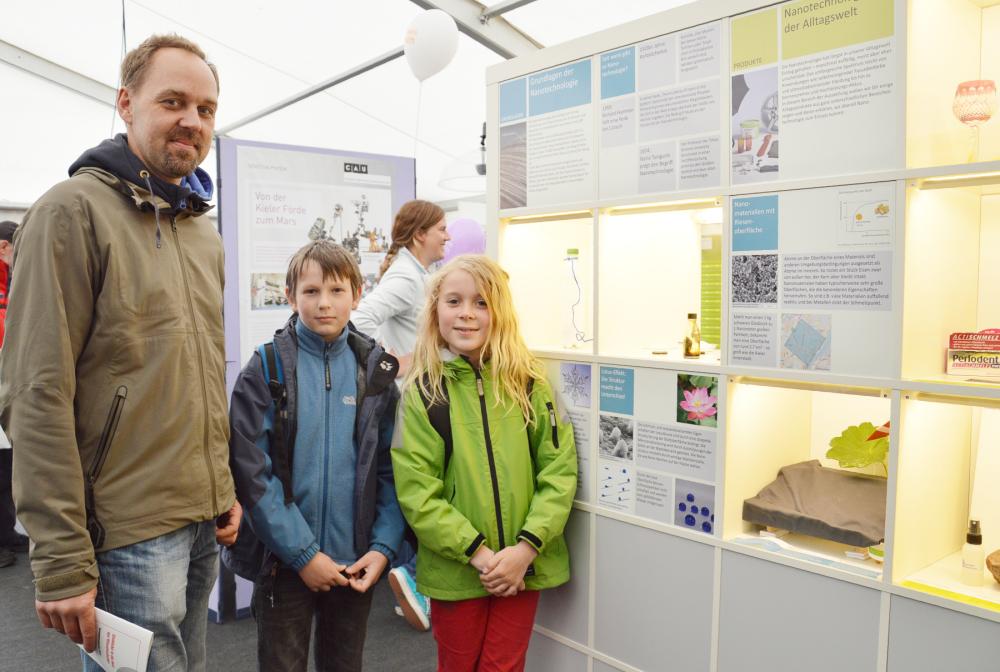

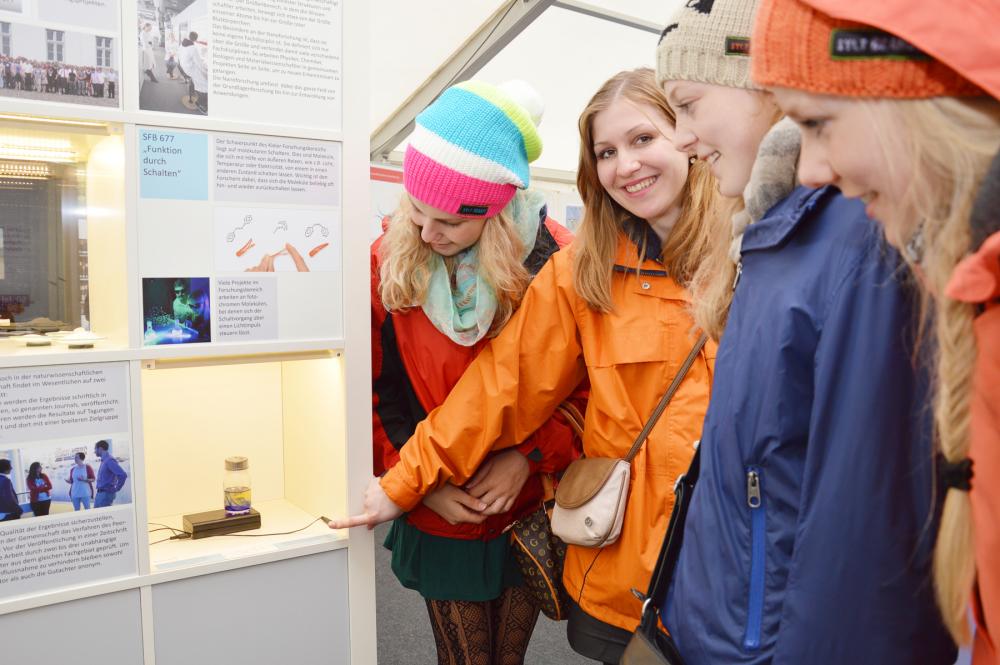
Photos © CAU
“A great success”, Dr. Stefan Schwarzer from the Leibniz Institute for Science and Mathematics Education (IPN) summarized the people’s feedback on the actions that shall allow them intelligible insights into the “science of small things”. In cooperation with Kiel University’s Collaborative Research Center (CRC) 677 “Function by Switching” the IPN created an exposition consisting of films, pictures, texts and different exhibits, illustrating how research finds its’ way into everyday products. It was the first time the exposition was shown to the public.
Visitors were amazed about functional clothing, which imitates the natural lotus effect, about varnish and even tooth paste that benefit from discoveries in nano science. “I had not been aware that we have ‘nano’ in so many everyday products. Particularly the illustration of products and their natural models was very exciting!”, a visitor said.
Many sudden insights could also be gained from the klick! laboratory that usually offers experiments to students from all kinds of schools on campus: To get an idea about the nano scale, children could, guided by scientists, measure the walls of bubbles. Also, they operated molecular switches through electricity and ultraviolet light und thus made liquids and solids change their colour.
After its’ successful Kieler Woche premiere, the exposition will be extended and offered to school classes. “Based on the visitors’ suggestions we will elaborate our concept”, Dr. Lorenz Kampschulte (IPN), who was responsible for the exposition, said. “We’re very happy that the kieler uni live guests had such a huge interest in our field of research”, Professor Rainer Herges, speaker of the CRC 677, said, “Hopefully we managed to enthuse many people for the fascinating world of nano structures – and maybe some now think about studying natural sciences or engineering.”
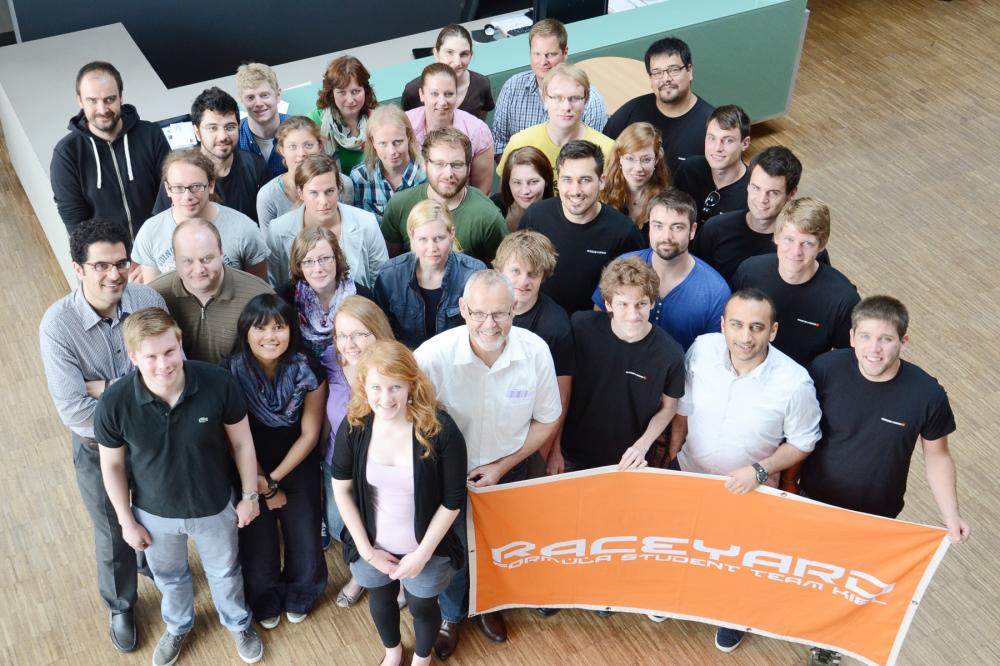
Photo © CAU
D. Schimmelpfennig
June 2013
Research Meets Application
Some investigate molecular machines, others build racecars: Ph.D. students from SFB 677 and members of the Formula Student team "Raceyard" from the university of applied sciences (FH) of Kiel met on Wednesday, June 19 to exchange ideas about their respective projects. The day's motto was "research meets application: the meaning of interdisciplinary cooperations in scientific and industrial projects".
show more
Both interdisciplinary teams exchanged experiences in the area of both microscopic and macroscopic machines during various presentations and guided tours at the university and the university of applied sciences (FH). Scientists from chemistry, physics and medical sciences at the CAU as well as engineering, business administration and design at the FH gained insight into each other's work environment. Hendrikje Neumann, speaker of SFB 677's research training group, explains the idea behind the meeting: "The successful cooperation in industrial environments particularly demands constant exchange between developers, researchers and manufacturers. To prepare our students for this future challenge, we would like them firstly to understand the technical terminology as well as the approach of other workgroups, enabling them to venture beyond their horizon."
In the morning the participants visited the audiolab, the cleanroom and femtosecond laser laboratories at the CAU campus. In the afternoon the raceyard team gave a guided tour through their workshop, presenting their home-built electric racecar, which will compete in this year's tournaments at Silverstone, Hockenheim and Barcelona.
Neumann continues, "This first exchange of our diverse workgroups and their respective forward-looking projects is supposed to add to Kiel's value as a place for education. The local industry can benefit from the focused expertise."
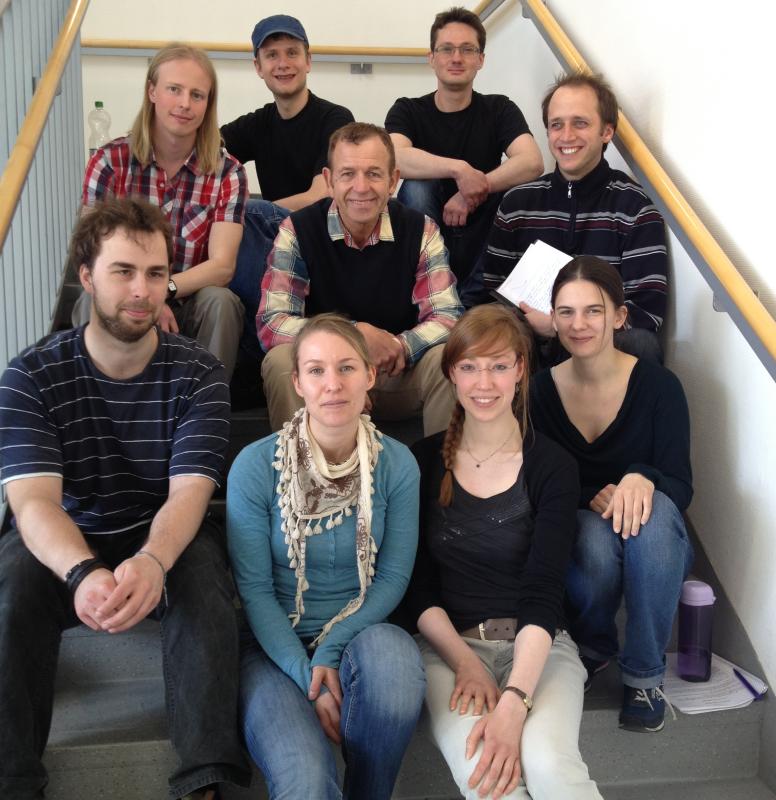
April 2013
New SFB English language training course
In this year, the graduate school of the SFB 677 organised another English class led by Gary Owston (Bristol Old Vic Theatre School, UK), in collaboration with the SFB 877.
show more
The participants can improve their pronunciation, communication skills or presentation skills according to their interest with many practical exercises and role-plays. To achieve an improved learning success, in this year the course is being held as a series of four individual courses spread out over the year with the next course dates being the 13th and 14th of June 2013.
February 2013
Second podcast online: "Joining the unjoinable"
In the SFB's second research podcast, scientists from the workgroups of Prof. Adelung and Prof. Staubitz present their collaborative project "joining the unjoinable".
hide Video
show more
Various natural plants contain surfaces which do not stick to anything, e.g. nasturtium. Water just rolls off, removing dirt particles in the process. This phenomenon is widely known as the lotus effect. Some artificial materials such as teflon behave similarly. They ensure that nothing sticks to your frying pan. Scientists in SFB 677 tried to join two such materials (teflon and silicone), which normally resist sticking together. The scientists developed a kind of paper clip, so-called tetrapodes. Due to their unique shape, these zinc tetrapodes can penetrate both materials, making them stick together without glue. This new discovery could be applied in the future to make paint stick to silicone joints or to develop improved medical devices.

January 2013
Spektrum neo: Rainer Herges reports on "bending molecules"
In the current issue of Spektrum neo, Spektrum's series aimed at children and young adults, Prof. Herges reports on "bending molecules" and their proposed applications. Switchable surfaces which can change properties at the push of a button, i.e. become waterproof, have yet to make their way into everyday life. While we might still have to wait for automaticallly adapting clothing to protect us from rain and snow, other tailored appliances are already available.
show more
supporting information:
exercises to embed Spektrum neo into science education at school
online experiment: in pursuit of the lotus effect

Photo © Anna Thielisch
October 2012
CRC student lab klick! is part of Kiel’s new Young Scientists’s Workshop
A lab made for school-aged students has been conceptionalised since mid 2011 within CRC 677. The lab called klick! has now become part of the city of Kiel’s new Young Scientists’s Workshop which was presented to the public and media in October.
show more
The klick!:lab is meant for school-aged children of all grades and offers opportunities for fascinating experiments and insight into the real life of chemists, physicists, biologists and material scientists. The lab thus offers CRC 677 scientists the opportunity to inform students and teachers about both research results as well as the process of doing science. The klick!:lab is managed by Stefan Schwarzer of Leibniz-Institute for Science and Mathematics Education (IPN). Its concept was designed within the subproject Public Relations (TPÖ) by Ilka Parchmann of IPN.
The experiments offered by the klick!:lab involve measurements of soap bubble thickness, demonstrations of photo-, thermo- and electrochromic switches, contact angle measurements and atomic force microscopy. All experiments are developed jointly by scientists and teachers. The klick! team will integrate new ideas for experiments from CRC 677.
The Kiel Young Scientists’s Workshop can be found in the Botanical Garden of Kiel University. Starting after the fall break, the first groups of students are scheduled for unconventional supervised experimenting and learning. The Scientists’ Workshop will also contribute to the training of teachers and university students from teaching degree programmes. Several other topics are present in the workshop’s think:lab, ocean:lab and energy:lab. Groups and individuals can register for the workshop at the new workshop website.
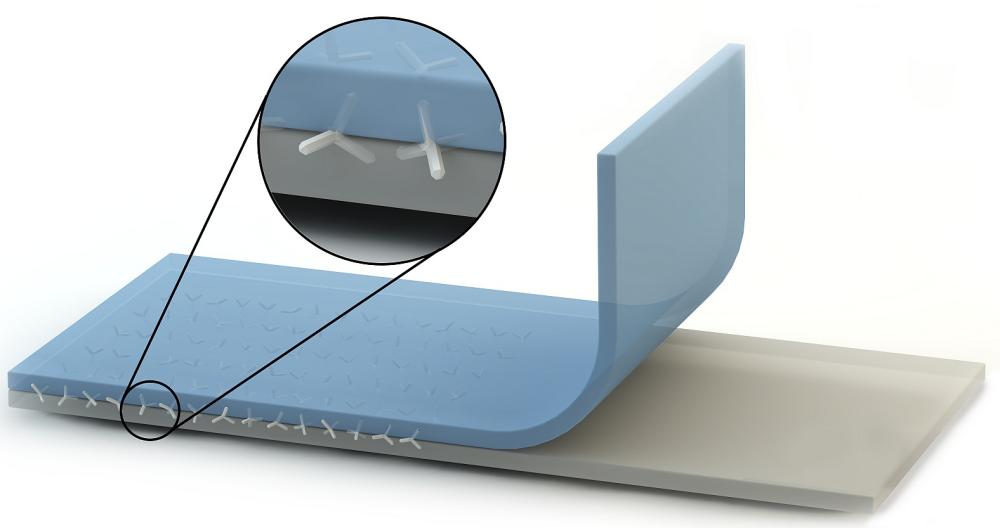
October 2012
Publication: Joining the unjoinable
Researchers of CRC 677 have succeeded in joining together two supremely unjoinable polymers — Teflon and cross-linked poly(dimethylsiloxane), the slippery coating used as backing paper for stickers. The work published in Advanced Materials was selected as a Nature Research Highlight and received considerable attention in the media.
show more
Three CRC 677 research groups combined their expertise in material science (R. Adelung) , chemistry (A. Staubitz) and biomechanics (S. Gorb) for this result of subproject C10. The approach will be used to connect switchable with unswitchable polymers.
September 2012
Dr. Vladimir Zaporojtchenko (1946 - 2012)
With great sadness we mourn the passing of our friend and colleague Dr. Vladimir Zaporojtchenko who passed away on August 31.
show more
Dr. Zaporojtchenko was one of the principal investigators of subproject C01 "Photoswitchable Metal Polymer Nanocomposites" from 2007 to 2011.
September 2012
Beilstein-TV Reports on "Sweet Switches"
A new podcast from Beilstein TV reports on the research on cell adhesion from the workgroup of Prof. Dr. R. Lindhorst.
hide Video
show more
This video provides an overview of our work on the investigation of carbohydrate-specific bacterial adhesion. We utilize functional glycomimetics and specific glycoarrays that may be fabricated from photoswitchable glycosides.
August 2012
Beilstein-TV Reports on Molecular Switches from SFB 677
A new podcast from Beilstein TV reports on the design, synthesis and characterization of new molecular switches from the workgroup of Prof. Dr. R. Herges.
hide Video
show more
The new switches are based on the diazocine switching unit, which itself is an improved azobenzene. Upon irradiation, the substances not only undergo a color change, but the less flexible molecular structure enables their application as a molecular synthetic machine.
The Beilstein TV movie gives an insight into the process leading from an idea and computer-based development to an optimized synthesis yielding new molecular switches.
August 2012
International SFB Meeting at Plön Castle
On August 20-22, 2012, SFB 677 presents the second international meeting titled "Molecular Switches: Elementary Processes and Applications". This year's conference will be held at Fielmann Academy at Plön Castle.
click here to see the scientific program

August 2012
Second English Language Training for SFB677 Students
Exciting science needs to be presented in an understandable and accessible way to achieve maximum impact. Therefore, in August, the second workshop „Communicating and Presenting in English“ for Ph. D. students of the SFB graduate school took place.
show more
The participants of the course were taught correct English pronunciation and how to systematically practise and improve their skills. A further focus was on improving their individual presentational skills including the efficient use of rhetoric devices. The SFB 677 was very fortunate to be able to engage Gary Owston as course leader. Gary is a specialist for voice and speech and has taught at the most prestigious drama schools in London and is now working at the Bristol Old Vic Theatre School, England. This work is continued on a weekly basis by Anne Staubitz and we hope to make this course a regular offer for the graduate school.
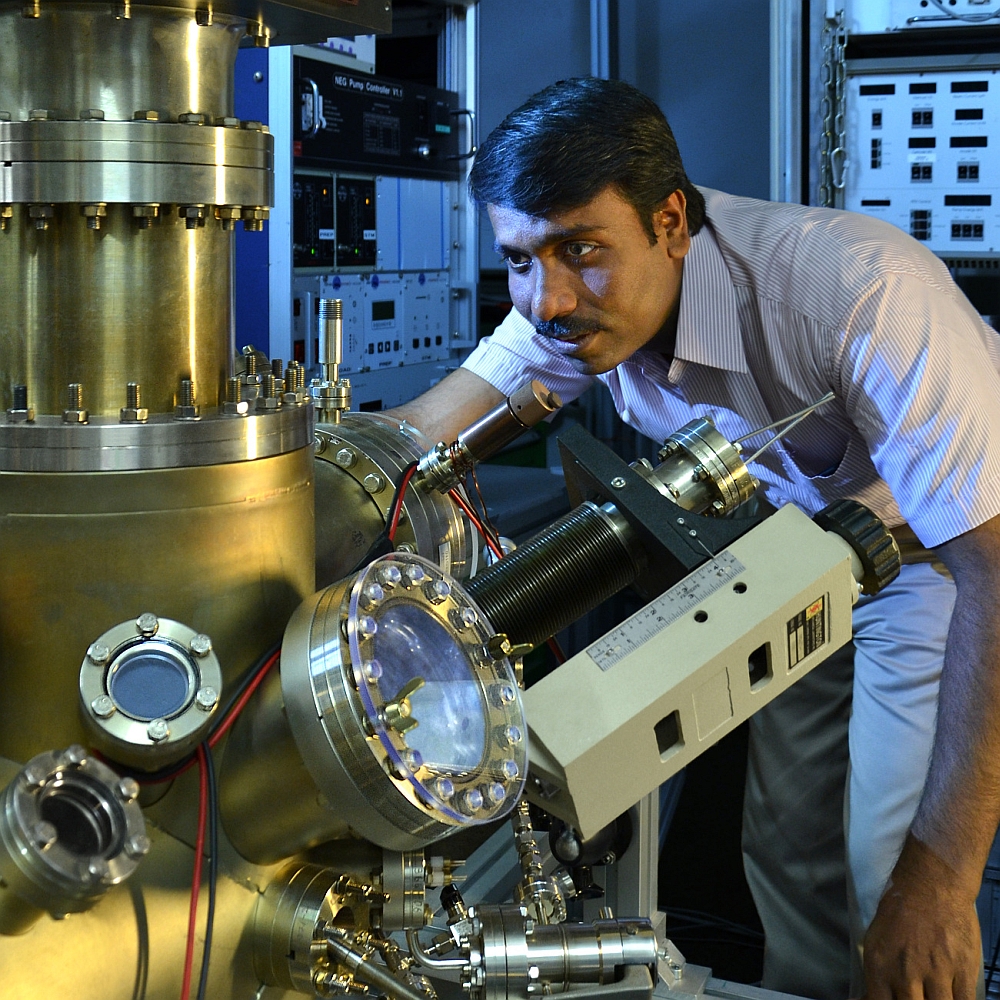
July 2012
Proof published: information can be stored with individual molecules
Physicists and chemists published their joint results in the journal "Angewandte Chemie".
show more
Using individual molecules instead of electronic or magnetic memory cells would revolutionise data storage technology, as molecular memories could be thousand-fold smaller. Scientists of CRC 677 took a big step towards developing such molecular data storage. Physicist Thiruvancheril Gopakumar with support of his colleagues of the research groups “Scanning Tunnelling Microscopy” led by Richard Berndt and “Anorganic Molecular Chemistry” led by Felix Tuczek succeeded in selectively switching on and off the magnetism of individual molecules, so-called spin-crossover complexes, by electrons. The interdisciplinary study proves that it is technically possible to store information using molecules.It was published in the German scientific journal “Angewandte Chemie” (Applied Chemistry).
- Link to publication.
- Link to press release.
July 2012
Video Clip Receives Award at Nanospots Film Festival
According to the jury, this film is “catchy with respect to both humour and didactics”. The video clip “Vijay and the switches” was awarded the third prize in the first nanospots film festival in Halle, Germany.
hide video
show more
Experts from nano science, politics, economy, media and society selected the movie for presentation in the Central German Multimedia Center in Halle as part of the "Long night of science". The audience judged all ten movies presented. The video clip was prepared jointly by a team of scientists led by S. Schwarzer (IPN) for the didactic part and T. K. Lindhorst (Otto Diels Institute for Organic Chemistry), for the scientific content together with the Kiel based film production Weitwinkelproduktion. The clip picks up the CRC 677 research topic of project B11 "Switchable cell adhesion".
July 2012
First Podcast online: “Glycocalyx – an undiscovered organelle”
Switchable cell adhesion is one of the research topics of the research group of Thisbe Lindhorst. The group presents their work in the first CRC 677 science podcast.
hide video
show more
The research deals with molecular switches that can prevent bacteria from docking on to other cells. "Such nano-switches can be useful for the diagnosis and treatment of bacteria such as EHEC", says T. K. Lindhorst. Podcasts are supposed to help promote the discussion between science and society about the topic of nano technology within CRC 677. The podcast is the extended, scientifically more detailed version of video clip "Vijay and the switches" which recently received an award at the first nanospots film festival.
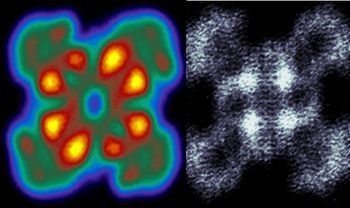
July 2012
Poster Award for Physicist Nadine Hauptmann
A poster prize has been awarded to Nadine Hauptmann at the 15th International Conference on non-contact Atomic Force Microscopy 2012 in Cesky Krumlov (Czech Republic). The prize was sponsored by the company Specs for an excellent poster presentation and outstanding research topic.
show more
The conference was devoted to the latest progress in dynamical atomic force microscopy and brought together 200 scientists from all around the world. Nadine is currently working on her Ph.D. in Prof. Berndt's group. Within her Ph.D. project she investigates molecular switches using combined STM and AFM m easurements. Her topic is a key subject in the SFB 677 "Function by switching". In particular, her work focuses on the acting forces when contacting the molecules with a metal electrode.
June 2012
Nanoworlds in Your Pocket
The nanoscale world becomes visible for everyone by "Nanotörn", a new application for smartphones developed by the Institute for Science and Mathematics Education (IPN) at Kiel in collaboration with Groningen University.
show more
The app takes the users on a journey into small dimensions and shows the research interests of the scientists in the collaborative research center 677 "Function by Switching" at Kiel University as well as the relevance of "nano" for everyday life. The app can scan AR codes (which are available as a booklet in our downloads section. The smartphone's camera serves as a kind of microscope, making the invisible visible. For more information please see the CAU press release.

June 2012
International SFB Meeting at Plön Castle
On August 20-22, 2012, SFB 677 presents the second international meeting titled "Molecular Switches: Elementary Processes and Applications". This year's conference will be held at Fielmann Academy at Plön Castle.
show more
This year's event will be attended by various renowned international speakers. The topics of the conference include: solid state and materials, supramolecular chemistry, STM / local manipulation, molecular architectures, ultrafast dynamics, photochemistry and theory, spin switching. The registration is now available.

May 2012
SFB 677 at Nano-Spots Short Film Festival
The nano short film festival nano-spots called for contributions this year following the motto "Innovative, scientific and creative".
show more
The public outreach project of SFB 677 (TPÖ) together with the working group of Thisbe Lindhorst produced the film "Vijay and the switches", which now qualified for the finals of the festival, which will be held in Halle on July 7th. The short film is thus among the top ten contributions to the festival, which will compete for awards that add up to 10.000 €. The film will be shown on this website soon.
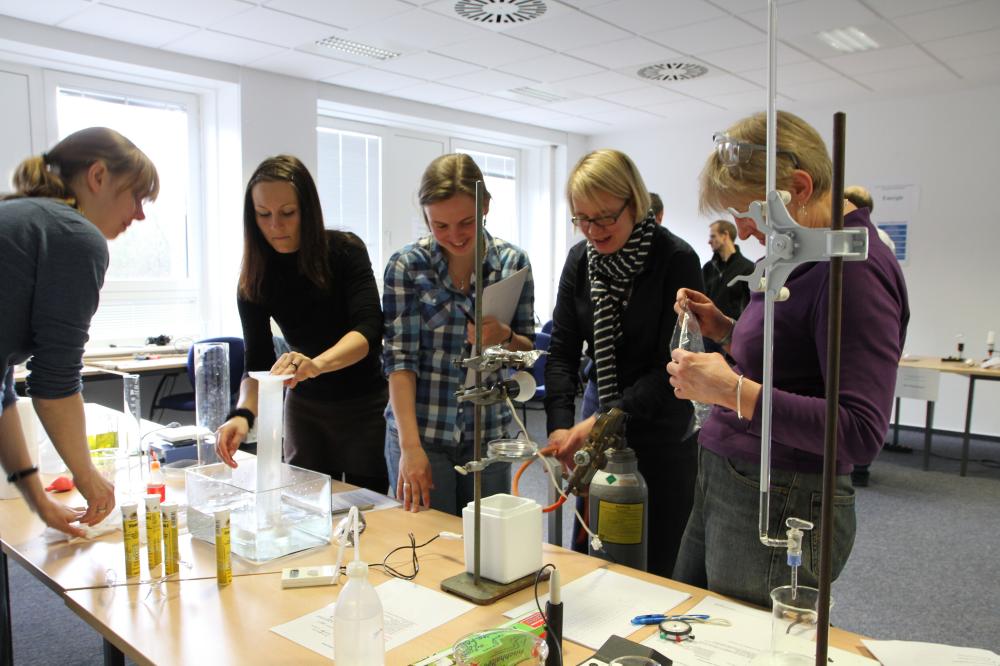
April 2012
Science Simulation Game
Teachers from Schleswig-Holstein were given the opportunity to try their hands at the first experiments from the Student Lab "Klick" and validate the setup for their own classes.
show more
Scientific tasks, processes and findings from the SFB 677 and other projects are translated into comprehensive and interesting experiments and simulations in the new student lab "Klick". Further information on the event can be found in the CAU press release (in German).
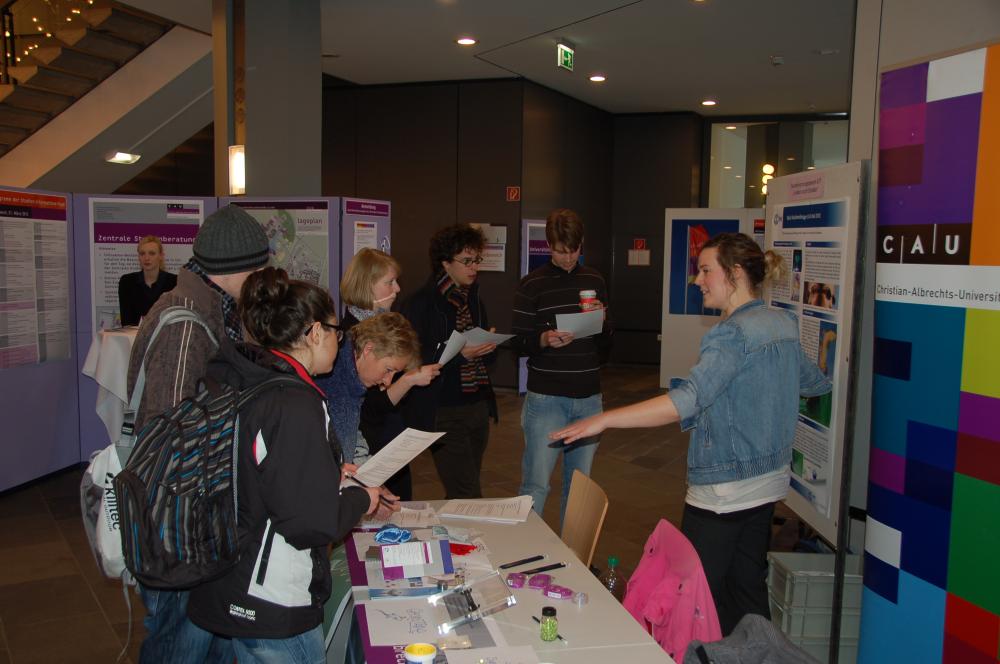
March 2012
SFB 677 for Future Students
The collaborative research center 677 presented an information booth as well as hands-on experiments at the study course information days of the Christina-Albertina University of Kiel on March 20-22, 2012.
show more
Students gained an insight into current research topics in our SFB. A "nano quiz" from Ilka Parchmann's group at the Leibniz Institute for Science and Mathematics Education was particularly well received.
March 2012
Concept Presentation of the SFB's Student Lab "Klick!"
The concept of the new student lab "Klick" of the collaborative research center 677 was presented at the 7th annual convention of the federal association of student labs (LernortLabor e.V.).
show more
Besides the pending central technical questions (What does nano-science mean? What are the principles of chemical as well as physical switching? Which methods and processes are suitable for characterization?), educational objectives were emphasized (enhancement of basic academic concepts, combination of experiment and multimedia, insight into scientists' everyday research).
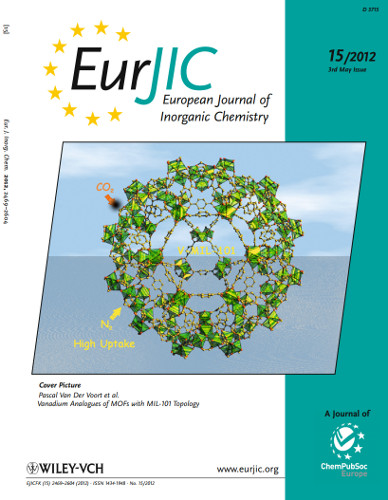
February 2012
New Publication on „Spin Switching in Transition Metal Complexes“
The workgroups of Rainer Herges and Felix Tuczek report on light-induced spin switching of iron complexes in the European Journal of Inorganic Chemistry.
show more
The paper is titled "FeIII Spin-Crossover Complexes with Photoisomerizable Ligands: Experimental and Theoretical Studies on the Ligand-Driven Light-Induced Spin Change Effect".

January 2012
Musher Award for Rainer Herges
In January 2012, the Musher Memorial Lecture Committee bestowed the Musher Award 2012 on Rainer Herges for his outstanding achievements in chemistry and nanosciences.
show more
Invited by the Musher Memorial Lecture Committee, Herges will give lectures at the Hebrew University of Jerusalem and other universities in Israel in May 2012. The Musher Award is handed out anually to commemorate the late Jewish chemist Jeremy Musher. The accolade is given only to exceptional researchers. Among the awardees are Nobel laureates Roald Hoffmann and George Olah. For more information see the CAU press release (in German).
January 2012
Boosting the Communication of Kiel's Nano SFBs
In January 2012, Stefanie Maack started her work as a contact for press and public relations for the SFB 677.
show more
Stefanie Maack is the new consultant for science communication at the CAU's center for press and communication services. Her work is focused on the collaborative research centers (SFB) 677, 855 and 877. She will support the SFBs mainly by composing press releases (e.g. in the process of important publications), advising SFB members on project communication (target audiences, information channels, language) as well as providing access to media. All SFB members are invited to contact Ms. Maack (smaack@uv.uni-kiel.de, -1755). For more information see CAU-intern (only CAU intranet).
May 2011
Second Funding Period Granted
On May 24, 2011, the DFG has granted the extension of SFB 677 for four additional years. See the CAU press release. (page in German)